




What's Happening?
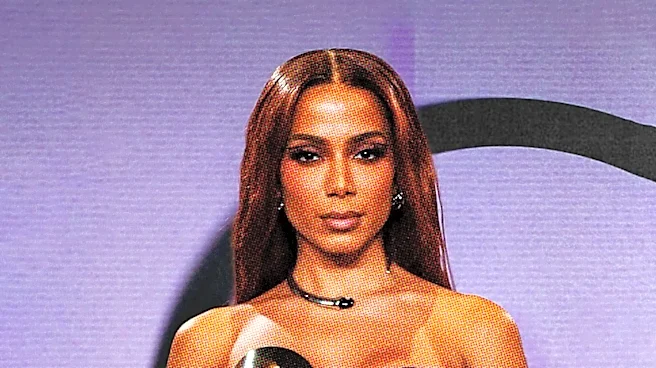
Brazilian pop artist Anitta has disclosed that she underwent her first cosmetic surgery due to pressure from her former manager. During a press conference in Paris, Anitta explained that she had never considered aesthetic procedures until her manager advised
her that she needed to be "beautiful" to succeed as a singer. This guidance led her to believe that physical alterations were necessary for career advancement. She recounted that after these initial interventions, she observed an increase in professional opportunities, which reinforced the idea that continuous body modification was beneficial. Anitta stated, "When I did it, I got many more contracts, more money, more everything, and I thought: 'Wow, she's right. I was ugly.' I stayed like that for a long time." Her remarks highlight a broader issue of aesthetic demands placed on women in the entertainment industry.
Why It's Important?
Anitta's revelation sheds light on the significant pressures faced by female artists to conform to specific beauty standards, particularly at the onset of their careers. This situation underscores how external expectations can influence personal choices and body image, potentially leading to a cycle of aesthetic procedures driven by perceived professional necessity. The artist's experience reflects a systemic issue within the entertainment industry where physical appearance can be prioritized over talent, impacting artists' self-perception and well-being. Her story also contributes to the ongoing conversation about the objectification of women in media and the often-unspoken requirements for success that extend beyond artistic merit. This can have a ripple effect, influencing younger aspiring artists and perpetuating unrealistic beauty ideals.
What's Next?
Anitta's candid discussion may encourage further dialogue within the music industry regarding the ethical responsibilities of artist management and the promotion of healthier body image standards. Her comments could inspire other artists to share similar experiences, potentially leading to a collective push for change in how talent is evaluated and supported. Additionally, this disclosure might prompt fans and media outlets to critically examine the role of appearance in celebrity culture and challenge the pressures that drive artists to undergo cosmetic procedures. The conversation could also extend to broader societal implications, encouraging a re-evaluation of beauty standards imposed on women in various professional fields.
Beyond the Headlines
Anitta's experience touches upon deeper ethical and cultural dimensions concerning autonomy and exploitation in the entertainment industry. The pressure she faced raises questions about the power dynamics between artists and their management, particularly when career success is explicitly linked to physical transformation. This situation can lead to a loss of agency for artists, who may feel compelled to make choices that compromise their personal values or physical health. Culturally, her story reflects a pervasive issue where women's worth and professional opportunities are often tied to their adherence to narrow beauty ideals. This narrative challenges the industry to move beyond superficial metrics and foster an environment where talent and artistic expression are valued above all else, promoting a more inclusive and authentic representation of artists.