








What's Happening?
The United States Department of Agriculture (USDA) has reduced its 2026 beef production forecast for the fourth consecutive month, lowering the estimate to 24.877 billion pounds. This represents a 90 million pound reduction from August's projection and
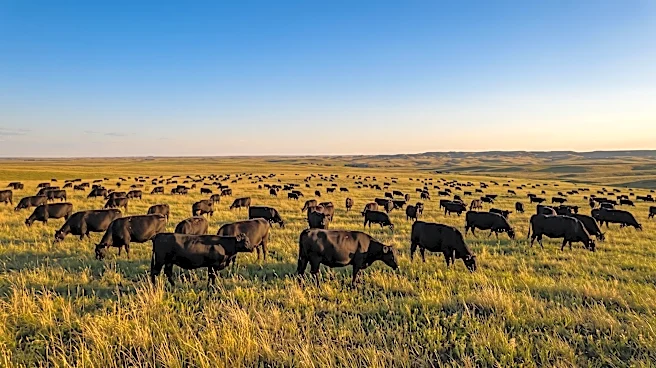
a total decline of 623 million pounds, or 2.4 percent, since May. Compared to 2025's actual production of 25.614 billion pounds, the 2026 forecast is now 2.9 percent lower year over year. The USDA attributes this ongoing reduction to a slower pace of fed cattle marketings, lighter carcass weights in the third quarter, and an anticipated decrease in cow slaughter later in the year. This trend reflects a long-term shrinking of America's cattle herd, resulting in fewer animals available for slaughter. Concurrently, the USDA also lowered its average fed steer price forecast for 2026 to $237.35 per hundredweight, an $8 decrease from its August projection, despite prices remaining historically high.
Why It's Important?
The continuous decline in U.S. beef production has significant implications for both domestic consumers and the global beef market. As the world's largest beef producer and importer, the U.S. responds to domestic production shortfalls by increasing imports and decreasing exports. The USDA's Economic Research Service forecasts a 14 percent rise in 2026 beef imports to 6.132 billion pounds, with Australia and Mexico being major contributors. Simultaneously, U.S. beef exports are projected to fall by 10 percent to 2.333 billion pounds, with a notable decrease in shipments to China. This dynamic means the U.S. is competing more aggressively for available beef on the international market. This increased demand from the U.S. tightens global supply, putting upward pressure on prices in beef-exporting countries and potentially leading to higher grocery store and restaurant prices for U.S. consumers, as well as increased costs or longer waits for beef in other importing nations.
What's Next?
The trend of declining U.S. beef production shows no immediate signs of reversal, with the USDA's next World Agricultural Supply and Demand Estimates (WASDE) update scheduled for October 9. If the pattern of downward revisions continues, further adjustments to the 2026 forecast are likely. The long-term impact on grocery store and restaurant prices in the U.S., and on global beef markets, will largely depend on the pace of U.S. herd rebuilding. Given the biological cycles of cattle, this rebuilding process is typically measured in years rather than months. Therefore, consumers and international buyers can anticipate continued market tightness and potentially elevated prices for the foreseeable future until the U.S. cattle herd begins to expand significantly.
Beyond the Headlines
The shrinking U.S. cattle herd and its ripple effects highlight the intricate interconnectedness of global agricultural markets and the sensitivity of food prices to domestic production trends. The U.S. position as both a major producer and importer means that its internal supply issues quickly translate into international market shifts. This situation underscores the economic vulnerability of consumers to agricultural cycles and the challenges faced by policymakers in balancing domestic producer interests with consumer affordability. The increased competition for global beef supplies could also lead to shifts in trade relationships and potentially incentivize other beef-producing nations to expand their own herds to meet growing international demand, thereby reshaping the global beef trade landscape in the long term.