


What's Happening?
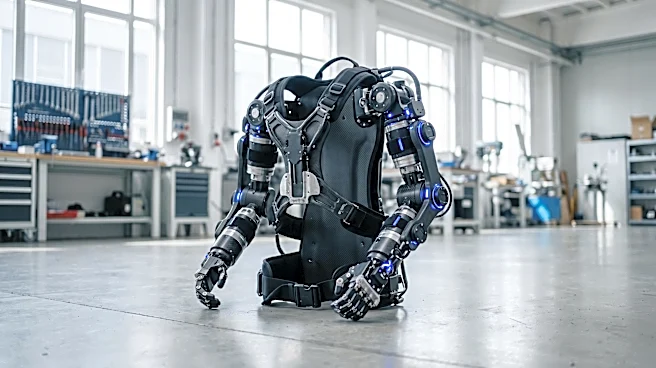
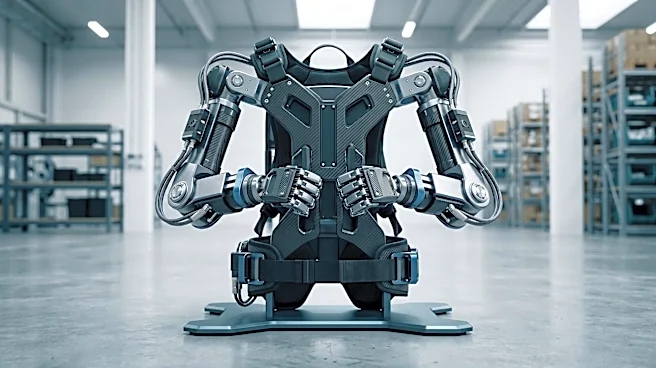
Figure AI has filed a patent application for a wearable robotic system designed to capture human arm movements. This system aims to use the collected data to train humanoid robots or control them remotely in real time. The application, US 2026/0364774
A1, was published on November 19, 2026, and was highlighted by Patentlyze, a patent analysis publication. The proposed system features a backpack-style frame with two articulated mechanical arms that mimic the movements of a human operator. This technology would allow movement data to be gathered from individuals performing everyday tasks in various environments, such as factories and warehouses, rather than requiring specialized motion-capture studios. The patent application includes broad claims covering wearable frames equipped with articulated arms and movement sensors, as well as more specific features like low-latency robot control and sensor configurations.
Why It's Important?
This patent application by Figure AI signifies a potential advancement in the development and deployment of humanoid robots, particularly in industrial and operational settings. The ability to efficiently collect human movement data directly from real-world tasks could significantly reduce the cost and time associated with training robots. This innovation could accelerate the integration of humanoid robots into various industries, enhancing automation and potentially improving efficiency in manufacturing, logistics, and other sectors. For businesses, this could mean faster robot deployment and more adaptable robotic systems. The low-latency remote control aspect also opens possibilities for human operators to guide robots in complex or hazardous environments with greater precision and responsiveness, impacting worker safety and operational flexibility.
What's Next?
While the patent application indicates Figure AI's research direction in robot training and teleoperation, it does not confirm the development or imminent introduction of a commercial product. However, the technology suggests a future where human workers could more intuitively and effectively 'teach' robots by demonstrating tasks. This could lead to more sophisticated and versatile humanoid robots capable of performing a wider range of functions. Future developments might involve refining the system's ability to capture nuanced movements and integrating it with advanced machine learning algorithms for autonomous robot learning. The broader implications point towards an increasing trend in collecting human movement data outside traditional laboratory settings, which could become a crucial tool for developers aiming to deploy robots in diverse industrial environments.
Beyond the Headlines
The ethical and societal implications of such a system are noteworthy. As robots become more adept at mimicking human movements and performing complex tasks, questions may arise regarding the future of human labor and the nature of work. The ability to transfer human skills directly to robots could lead to increased automation, potentially displacing certain types of jobs while creating new ones in robot supervision, maintenance, and development. Furthermore, the concept of 'teleoperation' with minimal delay raises considerations about human-robot collaboration and the potential for humans to extend their physical presence through robotic avatars. This technology could also influence the design of future human-robot interfaces, making them more intuitive and integrated with human physiology, thereby blurring the lines between human and machine capabilities in operational contexts.