







What's Happening?
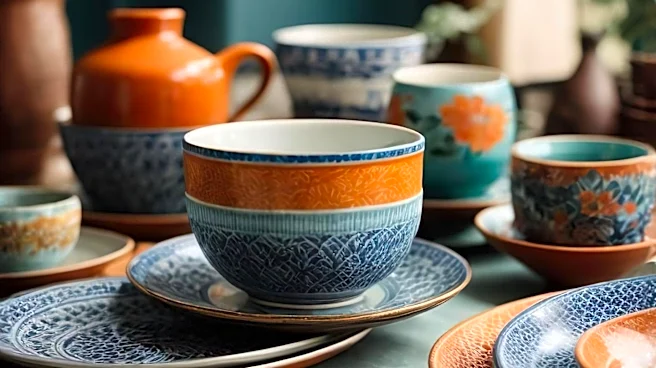
Bangladesh's ceramics industry, a significant manufacturing sector, is encountering new challenges due to rising gas prices, unstable energy supplies, and dependence on imported raw materials. These factors have squeezed manufacturers' margins, prompting
a shift from cost competitiveness to efficiency, innovation, and value creation. The industry, which employs around half a million people and has nearly Tk185 billion in investment, is urged to focus on superior design and customer experience. Akij Ceramics, a leading brand, emphasizes innovation and customer engagement through initiatives like the Akij Ceramics AR Studio and premium experience centers. The industry aims to transition from merely manufacturing tiles to shaping living spaces, reflecting a broader trend towards lifestyle-oriented products.
Why It's Important?
The ceramics industry's evolution is crucial for Bangladesh's economic landscape, as it supports a large workforce and significant investment. The shift towards innovation and design excellence is necessary to meet changing consumer expectations, which now prioritize lifestyle and sustainability over mere manufacturing quality. This transition could position Bangladesh as a regional hub for ceramics, enhancing its global competitiveness. However, the industry's reliance on imported materials and energy challenges necessitates strategic policy interventions and investment in technology. Success in this sector could lead to increased exports and economic growth, benefiting both the industry and the broader economy.
What's Next?
To sustain growth, the ceramics industry requires stable energy supplies, supportive government policies, and investment in technology and innovation. Manufacturers must focus on smarter sourcing, production efficiency, and developing value-added products. The industry's future success depends on collaboration between industry leaders and policymakers to address challenges like high energy costs and supply chain disruptions. By diversifying beyond new construction and focusing on renovation and export markets, the industry can mitigate risks associated with fluctuations in the real estate sector. Continued investment in design innovation and sustainable practices will be essential for long-term competitiveness.