




What's Happening?
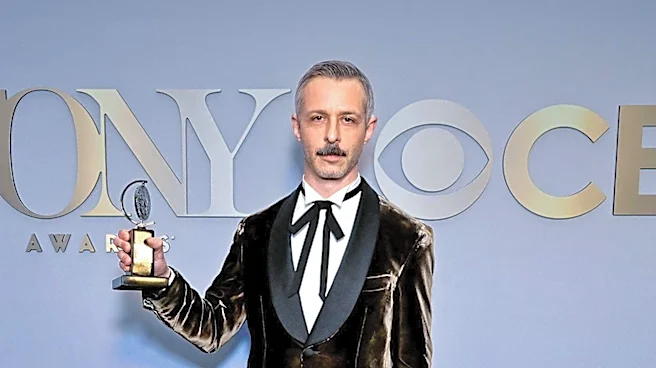
Actor Jeremy Strong has addressed the discourse surrounding his method acting techniques, stating he does not feel the need to apologize if his intensity makes co-stars uncomfortable. Strong, known for his role in "Succession," discussed his approach
on "The New Yorker Radio Hour" with David Remnick. He emphasized that his intention is never to interfere with others' work but maintained that his commitment to his craft is paramount. Strong's acting process, characterized by deep immersion and extensive preparation, has been a frequent topic of discussion, particularly after a 2021 New Yorker profile highlighted his serious dedication. He clarified that his focus is on his own commitment rather than dictating how others should work. Strong also revisited a past anecdote about wanting to experience tear gas for a role, explaining it was to achieve an authentic physiological response for a close-up, likening it to Marlon Brando's historical methods.
Why It's Important?
This discussion highlights a significant debate within the acting community regarding the boundaries and impact of method acting. Strong's stance underscores the tension between an actor's personal artistic process and the collaborative nature of film and television production. His comments reflect a broader conversation about the psychological and professional demands placed on actors, and how individual approaches can affect the working environment for an entire cast and crew. The defense of his methods, despite potential discomfort for others, emphasizes a dedication to authenticity that some actors prioritize above all else. This perspective can influence how future productions manage diverse acting styles and how audiences perceive the commitment required for certain performances, potentially shaping industry norms around actor preparation and on-set dynamics.
What's Next?
The ongoing conversation around Jeremy Strong's method acting is likely to continue influencing discussions within the entertainment industry regarding acting techniques and professional conduct on set. Directors and producers may increasingly need to navigate varying acting styles and their potential impact on cast and crew morale. Strong's continued success in demanding roles suggests that his approach, while sometimes controversial, is valued for its results. Future projects involving Strong or other method actors may see increased scrutiny or proactive measures to ensure a harmonious working environment. This could lead to more explicit discussions during pre-production about acting methodologies and expectations, potentially fostering new guidelines or understandings within the industry to balance artistic freedom with collaborative well-being.
Beyond the Headlines
Beyond the immediate professional implications, Strong's defense of his method acting touches upon deeper philosophical questions about art, authenticity, and the sacrifices artists make for their craft. His comparison to Marlon Brando suggests a lineage of actors who push boundaries to achieve what they consider true performance, often at personal or professional cost. This raises ethical considerations about the extent to which an artist's pursuit of authenticity should impact those around them. The public's fascination and occasional mockery of method acting also reflect societal attitudes towards intense dedication in creative fields, contrasting it with the more accepted forms of discipline seen in sports or music. This ongoing dialogue contributes to the evolving understanding of what constitutes 'good' acting and the psychological toll it can take, both on the performer and their colleagues.