






What's Happening?
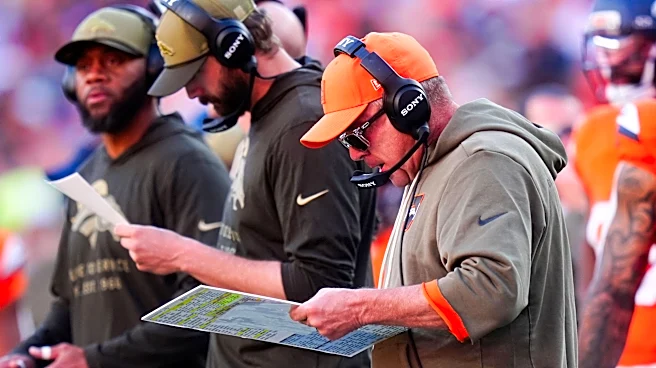
Beth Shuey, known as the former wife of NFL coach Sean Payton, has maintained a largely private life since their divorce in 2014. Their marriage, which began in 1992, spanned over two decades and included raising two children, Meghan and Connor Payton, during
significant periods of Sean Payton's professional football coaching career, including his tenure with the New Orleans Saints and their Super Bowl XLIV victory. Despite the public attention surrounding her former husband's career, Beth Shuey has largely remained out of the spotlight. Details regarding her current occupation, residence, financial status, and personal relationships post-divorce are not consistently established in reliable public records. Information about her early life, education, and how she met Sean Payton is also limited, with many online biographies lacking verifiable sources for specific claims.
Why It's Important?
The limited public information about Beth Shuey's life post-divorce highlights the distinction between public figures and individuals connected to them. While Sean Payton's career has been extensively documented, Beth Shuey's choice to maintain a private profile underscores the right to privacy even after being associated with a high-profile personality. This situation is important as it reflects broader societal expectations and boundaries concerning the personal lives of individuals who are not public figures themselves. It also serves as a reminder that public interest does not automatically grant access to every detail of a person's life. For those seeking information, it emphasizes the need for reliable sourcing and the ethical considerations of reporting on private individuals, particularly when verifiable facts are scarce. The narrative around Beth Shuey illustrates how individuals can navigate life after a high-profile marriage by choosing to remain outside the public eye, thereby controlling their personal story.
Beyond the Headlines
The ongoing public interest in Beth Shuey, despite her deliberate privacy, reflects a broader cultural fascination with the personal lives of individuals connected to celebrities and public figures. This phenomenon often leads to speculative reporting and the proliferation of unverified information online, underscoring the challenges of maintaining privacy in the digital age. Ethically, it raises questions about the responsibility of media outlets and online platforms to respect personal boundaries and verify information rigorously, especially when dealing with individuals who have not sought public attention. The narrative also subtly critiques the tendency to define individuals solely by their relationships to famous people, rather than acknowledging their independent identities and choices. Beth Shuey's story, in its lack of public detail, serves as a quiet counter-narrative to the pervasive culture of celebrity exposure, highlighting the value and possibility of a private existence even when one has been tangentially linked to fame.