






What's Happening?
Hawaii's tourism economy suffered a significant setback in September due to back-to-back tropical weather systems, resulting in a $140 million decline in visitor spending. According to preliminary data from the Department of Business, Economic Development
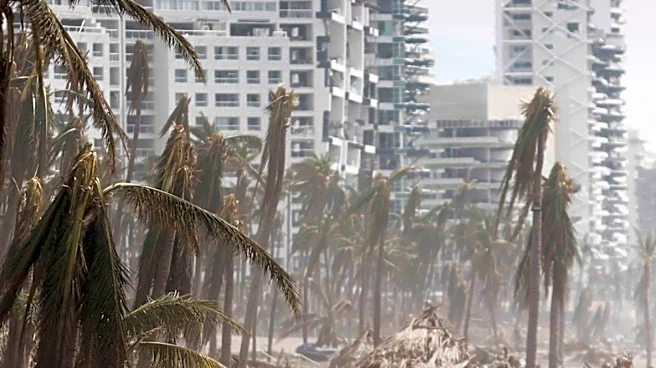
and Tourism (DBEDT), total visitor spending fell 9% to $1.41 billion compared to $1.55 billion in September of the previous year. Visitor arrivals also decreased by 3.6% to 672,990. The primary cause was Hurricane Lowell, which caused flight disruptions, port closures, and damage in early September, followed by outer rainbands from Hurricane Nolo weeks later. Jennifer Chun, DBEDT's director of tourism research, noted that all major markets, including U.S. West, U.S. East, Japan, and Canada, experienced declines. Although visitors spent more on a daily basis (up 5.4% to $283 per person), their average length of stay dropped from 8.25 days to 7.39 days, severely impacting local dining establishments.
Why It's Important?
The substantial financial impact on Hawaii's tourism sector underscores its vulnerability to natural disasters and broader economic pressures. A $140 million loss in visitor spending in a single month highlights the critical role tourism plays in the state's economy and the ripple effect such disruptions have on local businesses and employment. The decline in visitor arrivals and shorter stays directly affect restaurants, suppliers, and distributors, leading to reduced sales and cuts in workers' hours, particularly for smaller, independently owned establishments. This situation reveals the delicate balance between attracting tourists and managing the risks posed by environmental events and economic factors like inflation and rising airfares. The state's reliance on tourism means that such blows can have far-reaching consequences for its overall economic stability and the livelihoods of its residents.
What's Next?
To mitigate the impact on local businesses, the state is offering emergency relief through the Small Business Recovery Grant Program, administered by the Chamber of Commerce Hawaii. This program provides grants ranging from $5,000 to $10,000 to storm-impacted small businesses and nonprofits. Beyond immediate storm recovery, state researchers are also pointing to inflation and rising airfares as ongoing challenges that are squeezing household travel budgets, potentially reducing the amount visitors can spend once on the islands. Despite September's setbacks, the broader tourism picture for Hawaii remains positive, with year-to-date visitor spending across the first nine months of 2026 reaching $16.62 billion, a 2.8% increase over the same period in 2025. This suggests a resilient market, but continued monitoring of economic trends and climate impacts will be crucial.
Beyond the Headlines
The dual impact of natural disasters and economic factors like inflation on Hawaii's tourism industry reveals a complex challenge for sustainable economic development. While the immediate focus is on recovery and financial aid, the long-term implications include the need for enhanced disaster preparedness and economic diversification strategies. The reliance on tourism, while lucrative, exposes the state to significant risks. This situation could prompt discussions about investing in climate-resilient infrastructure, developing alternative economic sectors, and exploring ways to make tourism itself more sustainable and less vulnerable to external shocks. The shift in visitor spending patterns, with higher daily spending but shorter stays, also suggests a potential change in tourist behavior that could influence future marketing and service offerings in the Hawaiian islands.