







What's Happening?
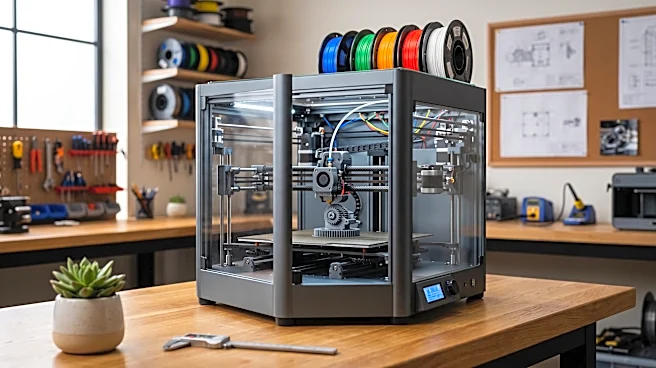
Bambu Lab is currently offering Black Friday deals on several of its multi-color 3D printers, including the A1 Combo, P2S Combo, and H2C AMS Combo. The A1 Combo, suitable for beginners, is priced at $359, down from $399. The P2S Combo, designed for enthusiasts,
is available for $649, reduced from $749. This model, which received a 4.5-star review, features a 256 x 256 x 256mm build volume and a fully enclosed CoreXY design, making it suitable for materials like ABS, ASA, and carbon fiber composites. It also includes automatic bed leveling, vibration compensation, and a quick-swap nozzle. For professionals and engineers, the H2C AMS Combo is offered at $1,899, a decrease from $2,199. The H2C, also rated 4.5 stars, boasts a Vortek hotend-changing system that allows switching between six interchangeable hotends and a standard nozzle, supporting up to seven materials without extensive filament purging. Additional AMS units can expand its capacity to 24 filaments. These prices are consistent with typical Black Friday sales from Bambu Lab.
Why It's Important?
These Black Friday deals from Bambu Lab are significant for the U.S. 3D printing market, making advanced multi-color printing technology more accessible to a wider range of consumers, from hobbyists to professionals. The reduced prices could stimulate increased adoption of 3D printing for various applications, including product design, rapid prototyping, and educational purposes. For businesses, particularly small and medium-sized enterprises, the affordability of high-performance printers like the P2S and H2C could lower barriers to entry for in-house manufacturing and design, potentially fostering innovation and reducing reliance on external production. The availability of printers capable of handling diverse materials like carbon fiber composites also expands the scope of projects that can be undertaken, impacting industries requiring durable and specialized parts. This market activity could also intensify competition among 3D printer manufacturers, potentially leading to further technological advancements and competitive pricing in the future.
What's Next?
Following the Black Friday sales, Bambu Lab will likely analyze sales data to gauge consumer interest in specific models and price points, which could influence future product development and marketing strategies. The increased installed base of Bambu Lab printers, particularly those with multi-material capabilities, may lead to a greater demand for specialized filaments and accessories, benefiting suppliers in the 3D printing ecosystem. Competitors in the 3D printer market will likely monitor Bambu Lab's sales performance and adjust their own pricing and promotional activities in response. The continued growth in accessibility of advanced 3D printing technology could also spur more educational institutions and vocational programs to integrate 3D printing into their curricula, preparing a future workforce with relevant skills in additive manufacturing.
Beyond the Headlines
The widespread availability of advanced, multi-color 3D printers at more accessible price points, as offered by Bambu Lab, has deeper implications for the democratization of manufacturing and design. It empowers individuals and small businesses to create complex, functional prototypes and end-use parts with greater ease and less capital investment. This shift could foster a new wave of innovation, enabling rapid iteration and customization across various sectors. Ethically, the increased accessibility of such technology raises questions about intellectual property and the ease of replicating patented designs. Culturally, it could further popularize the 'maker movement,' encouraging creativity and hands-on problem-solving. Long-term, this trend could contribute to a more distributed manufacturing model, potentially reducing supply chain vulnerabilities and promoting local production, thereby impacting global trade dynamics and economic resilience.