







What's Happening?
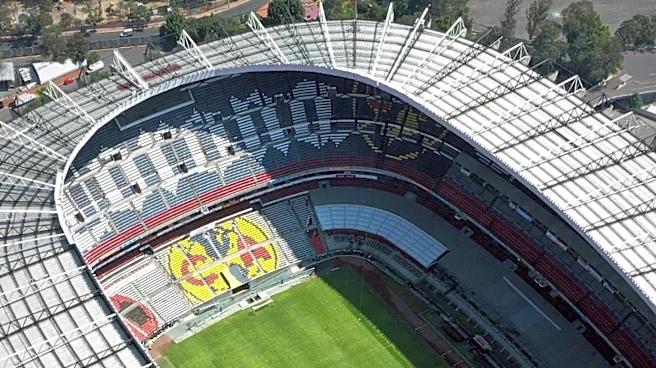
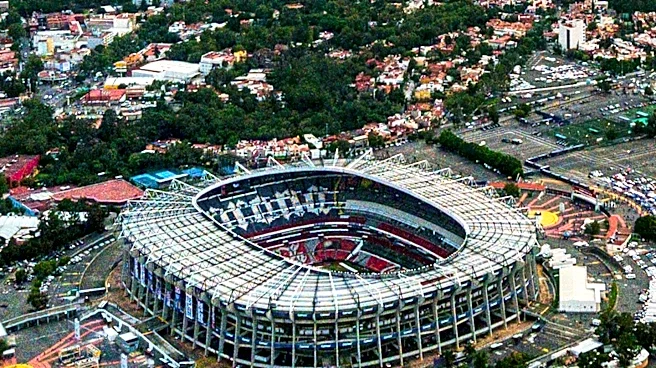
Mexico's national football team, known as El Tri, has maintained an impressive record at the Estadio Azteca during the World Cup 2026. The team has won all four of their matches without conceding a goal, leveraging the unique advantages of their home
stadium. Estadio Azteca, located in Mexico City, is renowned for its high elevation and large capacity, which have historically provided Mexico with a competitive edge. The stadium's altitude affects visiting teams by causing faster fatigue and longer recovery times. Mexico's last loss at this venue was in 2013 against the United States, highlighting its status as a formidable home ground.
Why It's Important?
The Estadio Azteca's role as a stronghold for Mexico underscores the importance of home advantage in international sports. The stadium's high altitude and large crowd capacity create challenging conditions for visiting teams, contributing to Mexico's success. This advantage is particularly significant in the context of the World Cup, where every match can determine a team's progression. Mexico's performance at the Azteca not only boosts national pride but also enhances their chances of advancing further in the tournament. The stadium's historical significance and unique characteristics make it a key factor in Mexico's World Cup strategy.
What's Next?
As Mexico prepares to face England in the Round of 16 at the Estadio Azteca, the focus will be on whether they can maintain their unbeaten record. A victory would further solidify the stadium's reputation as a fortress for El Tri. The match will also test England's ability to adapt to the challenging conditions. Looking ahead, the outcome could influence future strategies for both teams, particularly in terms of preparation for high-altitude matches. The Estadio Azteca's continued use in international tournaments may prompt discussions about the impact of environmental factors on sports performance.