
What's Happening?
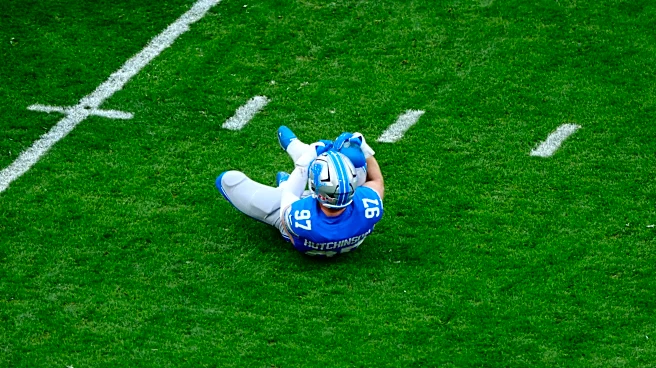
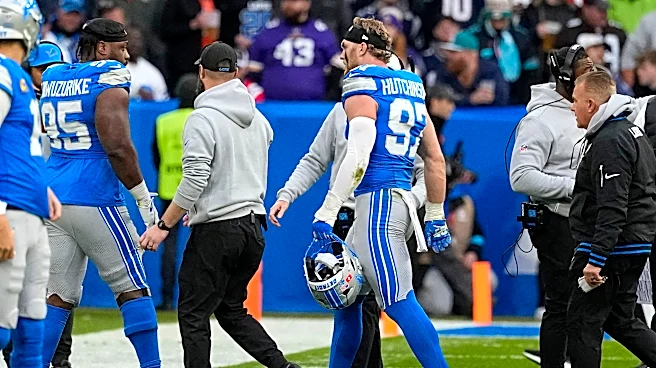
Detroit Lions defensive coordinator Kelvin Sheppard has stated that the team will rely on a collective effort to compensate for the loss of star pass rusher Aidan Hutchinson, who suffered a torn ACL during Sunday's 35-10 victory over the New England Patriots
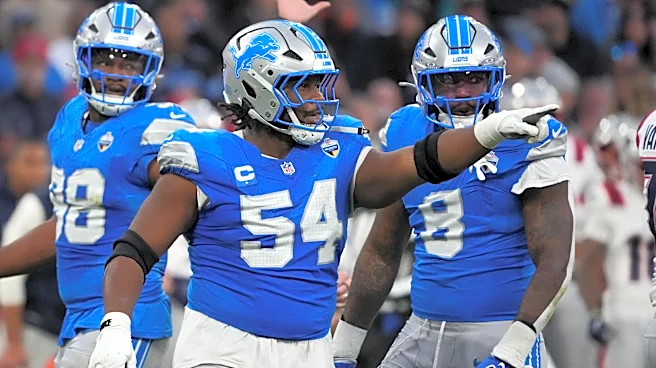
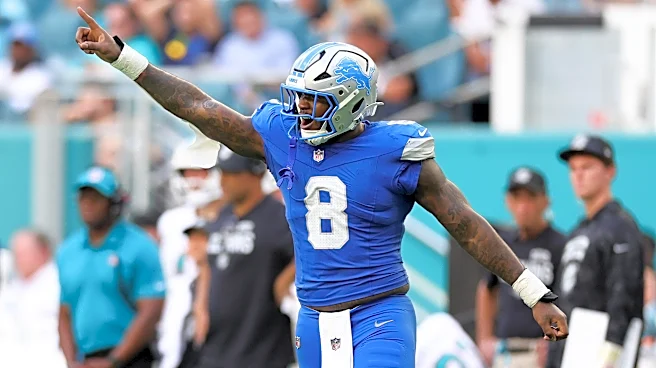
in Germany. Sheppard emphasized that no single player is expected to replace Hutchinson's production alone, instead calling for all 11 defensive players to contribute. The Lions' defense has demonstrated its ability to generate pressure from multiple positions, currently ranking third in the NFL with 32 sacks. Hutchinson accounted for six of these sacks, with the remaining 26 coming from other defenders. Key contributors include Alim McNeill with 6.5 sacks, D.J. Wonnum with six, and rookie Derrick Moore with four. The team is exploring options to fill the void, including potentially increasing Moore's workload and the NFL debut of Ahmed Hassanein. The Lions are preparing for their upcoming game against the Tampa Bay Buccaneers with a 7-2 record, having won five consecutive games.
Why It's Important?
The injury to Aidan Hutchinson, a pivotal player for the Detroit Lions, presents a significant challenge to the team's championship aspirations. His absence necessitates a strategic shift in defensive play, moving from reliance on a single dominant pass rusher to a more distributed approach. This situation will test the depth and adaptability of the Lions' defensive roster and coaching staff. The success of this collective strategy could serve as a model for other NFL teams facing similar injuries to key players, highlighting the importance of a well-rounded defensive unit rather than individual star power. For players like Derrick Moore, this creates a substantial opportunity to step into a more prominent role and prove their capabilities, potentially accelerating their development and impact on the team. The team's ability to maintain its strong defensive performance without Hutchinson will be crucial for its playoff positioning and overall success in the competitive NFL landscape.
What's Next?
The Detroit Lions will immediately implement their collective defensive strategy as they prepare to face the Tampa Bay Buccaneers. The coaching staff will likely adjust schemes to maximize the contributions of various defensive linemen and linebackers, potentially increasing playing time for players like Derrick Moore and Ahmed Hassanein. The performance in the upcoming games will be a critical indicator of the defense's ability to adapt and maintain its effectiveness without Hutchinson. The team will monitor the development of younger players stepping into larger roles, assessing their capacity to consistently generate pressure and disrupt opposing offenses. The long-term implications for Hutchinson's recovery and return will also be a focus, though the immediate priority remains sustaining defensive performance throughout the current season. The team's ability to continue its winning streak will depend heavily on the successful execution of this new defensive approach.
Beyond the Headlines
Hutchinson's injury and the Lions' response highlight a broader philosophical debate in professional sports regarding team construction: whether to invest heavily in a few superstar players or to build a deeper roster with more distributed talent. The Lions' current situation forces them to lean into the latter, potentially demonstrating the resilience of a team built on collective strength. This scenario could also influence future draft strategies and free agency decisions across the NFL, as teams might prioritize depth and versatility over singular, high-impact players, especially in positions prone to injury. Furthermore, it underscores the psychological aspect of team sports, where a significant injury can either demoralize a team or galvanize it to perform beyond expectations through a shared sense of purpose and responsibility. The Lions' ability to overcome this adversity could become a defining narrative for their season.