




What's Happening?
Taiwan Semiconductor Manufacturing Company (TSMC), the world's largest contract chipmaker, is experiencing an unprecedented surge in demand for its chipmaking equipment and factory construction, driven by the booming artificial intelligence (AI) sector.
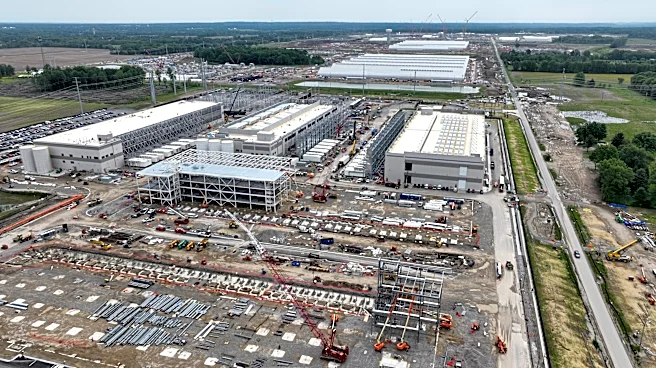
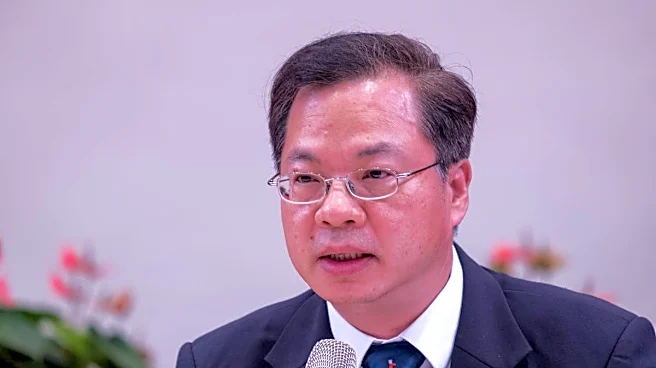
According to Deputy Co-COO Cliff Hou, TSMC's quarterly equipment purchase estimate has nearly doubled, reaching 1.9 times the level projected in December. The company is currently building approximately 20 chipmaking facilities, including wafer fabs and advanced packaging plants, across Taiwan and overseas locations such as Arizona, Japan, and Germany. This represents a significant increase from its historical rate of building four to five facilities annually. Despite this aggressive expansion, TSMC is struggling to meet customer demand, with CEO C.C. Wei stating that it will be a long time before the company can satisfy all customer needs. A critical bottleneck in this expansion is a severe shortage of experienced construction workers in Taiwan, who possess specialized skills required for building advanced cleanroom facilities.
Why It's Important?
The immense demand for TSMC's chips, particularly for AI accelerators used by companies like NVIDIA, AMD, Google, Amazon, and Microsoft, highlights the critical role TSMC plays in the global technology supply chain. The company's inability to fully meet demand signals a structural mismatch between the AI industry's needs and the physical capacity to produce the necessary hardware. This capacity crunch could slow down the development and deployment of AI technologies globally, impacting various industries reliant on advanced computing. The shortage of specialized construction workers underscores a deeper, less visible constraint in the high-tech manufacturing sector, suggesting that even with significant capital investment and technological prowess, human capital remains a vital limiting factor. This situation could lead to increased chip prices, extended lead times for AI hardware, and potentially influence strategic decisions by governments and companies regarding semiconductor supply chain resilience and domestic manufacturing capabilities.
What's Next?
TSMC plans to continue its aggressive expansion, with CEO C.C. Wei indicating that AI-driven semiconductor demand will remain strong through 2029 and 2030. The company has raised its full-year capital expenditure guidance to $60-$64 billion, a significant increase from earlier projections, to fund its factory construction and equipment purchases. Equipment suppliers like ASML, Applied Materials, Lam Research, and KLA Corporation are expected to see continued high demand, with ASML already planning a 30% capacity expansion for 2027. However, the shortage of specialized construction workers in Taiwan and other regions remains a critical challenge that could impede the timely completion of new facilities. Stakeholders, including major tech companies and governments, will likely continue to press for increased capacity and explore strategies to mitigate supply chain risks, potentially through further investments in domestic chip production and workforce development programs.
Beyond the Headlines
The current situation at TSMC reveals a profound shift in the global industrial landscape, where the physical infrastructure for advanced technology is becoming as critical as the technology itself. The specialized nature of cleanroom construction, requiring decades of accumulated expertise concentrated in a few regions, exposes a vulnerability in the global supply chain. This bottleneck is not easily resolved by financial investment or technological innovation alone; it requires long-term investment in skilled labor development and training. The implications extend to national security and economic competitiveness, as countries vie for technological sovereignty and resilient supply chains. The ongoing struggle to build fabs fast enough could also accelerate the adoption of advanced manufacturing techniques like digital twins to optimize factory construction and operation, as companies seek every possible efficiency to overcome physical constraints and meet insatiable demand.