



What's Happening?
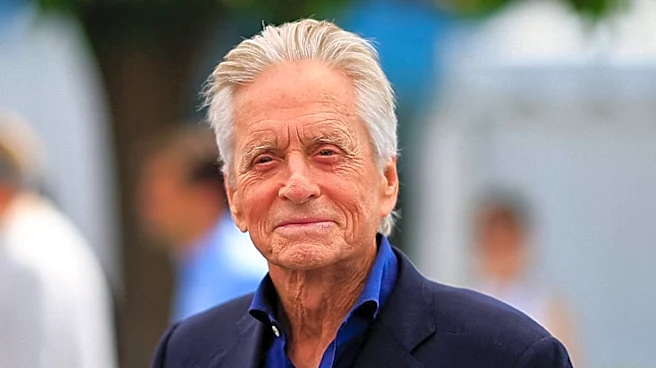
During a 2015 appearance on 'The Late Late Show with James Corden,' actor Michael Douglas revealed his sole career regret was declining a voiceover role in an animated film. He stated that this particular role would have been more profitable than any
other film he had ever made. When pressed by James Corden, Douglas reluctantly identified the film as Disney's 'Frozen.' Despite his extensive career spanning five decades with numerous successful films like 'Wall Street' and 'Basic Instinct,' the financial implications of this missed opportunity evidently left a lasting impression. Douglas mentioned he could not recall which specific character he was offered, but fan speculation often points to either Grand Pabbie, voiced by Ciarán Hinds, or the iconic snowman Olaf, ultimately voiced by Josh Gad. The original 'Frozen' film, released in 2013, grossed approximately $1.29 billion worldwide, and its 2019 sequel earned $1.45 billion, becoming the highest-grossing animated film of its time before being surpassed by 'Inside Out 2' in 2024.
Why It's Important?
This anecdote highlights the significant financial power and long-term earning potential within the animated film industry, particularly for major franchises like Disney's 'Frozen.' The revelation from a seasoned actor like Michael Douglas underscores how voiceover roles, especially in successful animated features, can generate substantial income through not only initial film earnings but also sequels, merchandise, and theme park tie-ins. This contrasts sharply with traditional live-action roles, where an actor's compensation is often tied more directly to upfront fees and box office performance. For actors, this demonstrates the strategic importance of evaluating projects beyond immediate compensation, considering the potential for residual income and brand longevity. For studios, it reinforces the value of securing talent for animated franchises, as these investments can yield massive returns over many years, influencing casting decisions and contract negotiations in the animation sector.
What's Next?
While Michael Douglas's regret is a past event, the ongoing success of animated franchises suggests that similar high-earning opportunities will continue to arise for actors. Studios will likely continue to pursue established talent for voice roles, recognizing the marketing appeal and potential for long-term revenue generation. Actors, in turn, may become more discerning about declining such roles, especially those tied to major studios and potential multi-film sagas. The 'Frozen' franchise, for instance, continues to be a significant asset for Disney, with ongoing merchandise sales, theme park attractions, and potential future installments. This trend indicates a sustained demand for voice talent in animated productions, potentially leading to more lucrative contracts and a greater emphasis on the long-term financial benefits of these roles for performers.
Beyond the Headlines
The story subtly reveals a shift in the entertainment industry's value perception, where the cultural impact and financial longevity of animated characters can rival, or even surpass, that of live-action roles. The 'billion-dollar what-if' for Douglas illustrates how a single voice performance can become a cornerstone of a massive commercial enterprise, generating revenue far beyond initial expectations. This also touches upon the evolving nature of celebrity endorsement and intellectual property. When an actor lends their voice to an iconic animated character, they become intrinsically linked to a brand that can generate revenue for decades through various media and consumer products. This long-term financial model for animated franchises presents a unique ethical and legal dimension regarding talent compensation, intellectual property rights, and the valuation of creative contributions in an increasingly diversified entertainment landscape.