

What's Happening?
The traditional kitchen upstand, a feature designed to neaten the joint between countertop and wall, is being reconsidered in modern kitchen design. Experts suggest that while upstands are not obsolete, their use is evolving. Designers are opting for
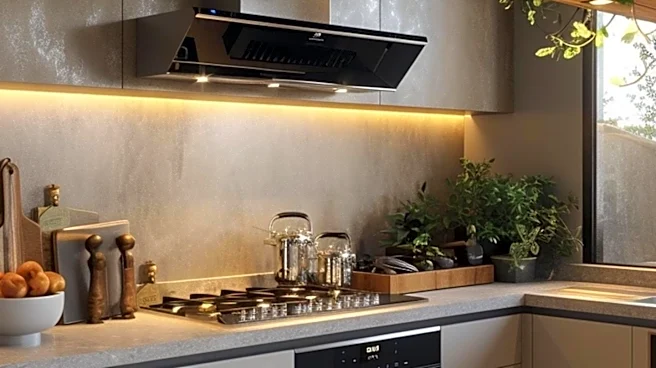
more visually interesting methods, such as extending countertop materials up the wall to create a seamless backsplash or using tiles as a full wall treatment. These alternatives offer a more contemporary look and allow materials to become a stronger design feature. The shift reflects a broader trend in kitchen design towards cleaner, more integrated aesthetics.
Why It's Important?
The evolution of kitchen upstands highlights a shift in interior design towards more thoughtful and cohesive aesthetics. By reimagining traditional features, designers can create spaces that are both functional and visually appealing. This trend reflects a growing preference for simplicity and integration in home design, which can enhance the overall ambiance and functionality of a kitchen. As homeowners seek to modernize their spaces, these design innovations offer new possibilities for personalization and style, potentially influencing broader trends in interior design.
What's Next?
As the trend towards modern kitchen design continues, homeowners and designers may increasingly explore alternatives to traditional upstands. This could lead to a wider adoption of seamless backsplashes and integrated wall treatments, further blurring the lines between functionality and aesthetics. The focus on creating cohesive and visually appealing spaces may also drive innovation in materials and design techniques, offering new opportunities for customization and creativity in kitchen design. As these trends gain traction, they could influence broader shifts in interior design, encouraging a move towards more integrated and personalized home environments.
Beyond the Headlines
The reconsideration of kitchen upstands reflects a broader cultural shift towards minimalism and integration in home design. By moving away from traditional features, designers can create spaces that are more aligned with contemporary lifestyles and preferences. This trend also highlights the importance of sustainability in design, as many modern alternatives use recycled or reclaimed materials. As homeowners become more conscious of their environmental impact, the demand for sustainable and innovative design solutions is likely to grow, influencing future trends in interior design.