







What's Happening?
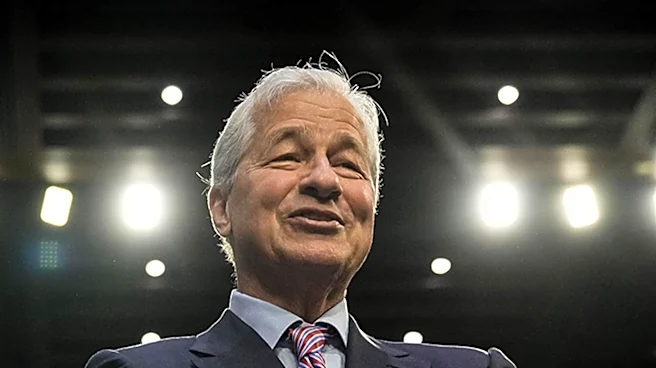
Jamie Dimon, CEO of JPMorgan Chase, has raised concerns about the impact of insecurity on leadership effectiveness. Speaking on 'The Master Investor Podcast with Wilfred Frost,' Dimon emphasized that a lack of self-confidence can disconnect leaders from
their organizations, potentially derailing their careers. He noted that some leaders 'grow into' their roles, while others 'swell into' them, with insecurity driving the latter. Executive coaches and recruiters have identified behaviors such as micromanaging, rejecting dissent, and seeking excessive credit as signs of insecurity. These behaviors can hinder a leader's ability to effectively manage their team and make informed decisions. The discussion highlights the importance of self-awareness and the ability to accept criticism as key traits of successful leaders.
Why It's Important?
The issue of insecurity among CEOs is significant as it can have widespread implications for businesses and their stakeholders. Insecure leadership can lead to poor decision-making, reduced employee morale, and ultimately, a decline in company performance. By recognizing and addressing these behaviors, companies can foster a more open and effective leadership culture. This is particularly important in today's fast-paced business environment, where adaptability and collaboration are crucial for success. Leaders who can acknowledge their limitations and seek input from others are more likely to drive innovation and maintain a competitive edge. The insights shared by Dimon and other experts serve as a reminder of the critical role that emotional intelligence plays in leadership.
What's Next?
Organizations may begin to place greater emphasis on leadership development programs that focus on building self-awareness and emotional intelligence. Executive coaching could become more prevalent as companies seek to equip their leaders with the tools needed to manage insecurity and foster a positive organizational culture. Additionally, boards and investors might scrutinize leadership behaviors more closely, prioritizing candidates who demonstrate humility and a willingness to learn. As the conversation around leadership insecurity continues, it could lead to broader changes in how companies evaluate and support their executives.