





What's Happening?
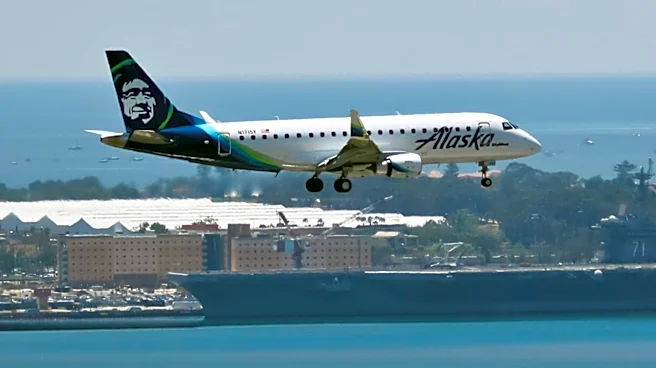
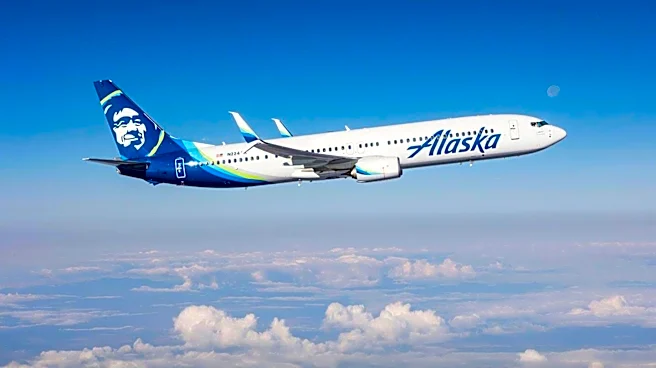
Alaska Air Group, parent company of Alaska Airlines and Hawaiian Airlines, reported its third-quarter 2026 results on October 20, 2026, showing a GAAP net loss of $147 million. Despite a 14% year-over-year revenue increase to $4.3 billion, the company cited
'Hawaii headwinds' as a significant challenge. Executives noted that Hawaii was one of the weakest-performing parts of their network this year, attributing this to weather disruptions, excess industry capacity, and merger integration issues. Concurrently, Alaska Air Group announced an investment of over $600 million into its Honolulu hub through its Kahuʻewai Hawaiʻi Investment Plan. This plan includes funding for airport spaces, technology upgrades, and Hawaiian aircraft interiors, with construction already underway for a new Hawaiian Airlines Lounge at Honolulu airport's Mauka Concourse, expected to open in the first half of 2028.
Why It's Important?
This development highlights the complex operational and financial landscape for major U.S. airlines, particularly those with significant exposure to specific regional markets like Hawaii. The reported net loss, largely driven by an unexpected $1.8 billion increase in fuel expenses for 2026, underscores the volatility of operating costs in the airline industry. The strategic decision to invest heavily in the Honolulu hub, despite current 'headwinds,' signals a long-term commitment to the Hawaiian market. This investment could enhance passenger experience and operational efficiency, potentially strengthening Alaska Air Group's competitive position in the region. However, the current overcapacity and 'weak market' conditions in Hawaii suggest that travelers may not see immediate fare reductions, as the airline aims to maintain competitive pricing in the main cabin while hoping for market improvements in the coming year.
What's Next?
Alaska Air Group executives anticipate an improvement in the Hawaiian market next year as merger integration concludes, weather disruptions subside, and industry capacity moderates. The company's Kahuʻewai Hawaiʻi Investment Plan will continue to roll out, with the new Hawaiian Airlines Lounge at Honolulu airport expected by the first half of 2028. Other planned enhancements include a premium security bypass at Honolulu airport in 2027 for premium travelers, and new Atmos Rewards debit card and earning options for Atmos members in early 2027 and January 2027, respectively. While no immediate changes to mainland-to-Honolulu flight routes or fares have been announced, the company's focus remains on improving its operational efficiency and passenger experience in Hawaii. Travelers are advised to monitor current prices and route changes directly with the airlines.
Beyond the Headlines
The situation with Alaska Air Group in Hawaii reflects a broader trend in the U.S. airline industry where strategic long-term investments are made even in the face of short-term financial challenges. The emphasis on enhancing the Honolulu hub, despite current market difficulties, suggests a belief in the enduring appeal and future growth potential of Hawaiian travel. This approach could lead to a more resilient and customer-centric travel experience in the long run, but it also places pressure on the company to manage costs and capacity effectively. The interplay between fuel costs, market demand, and strategic infrastructure investments will be crucial in determining the airline's profitability and its impact on the broader U.S. travel sector. The company's commitment to Hawaii, even during a 'weak year,' underscores the strategic importance of key hubs in maintaining network strength and customer loyalty.