
What's Happening?
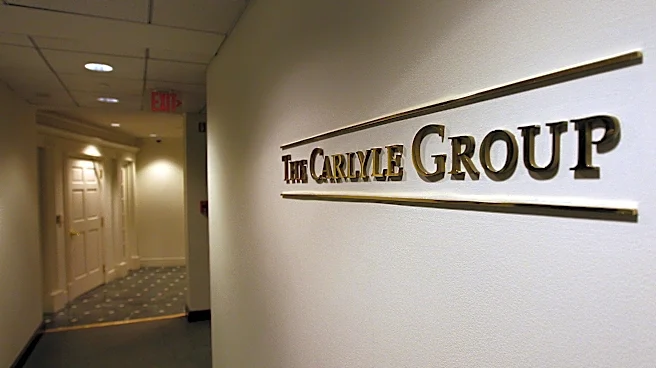
The Carlyle Group Inc. (NASDAQ: CG), a global investment firm, expects to achieve an initial close for its next U.S. buyout fund either this quarter or the next. This fundraising effort is part of a broader
three-year target to raise $200 billion. Concurrently, the firm's private equity wealth product, CPEP, has surpassed $1 billion and has been launched on its first wirehouse platform, with additional platforms anticipated in 2027 and 2028. Despite these developments, UBS has downgraded Carlyle Group from a 'Buy' to a 'Neutral' rating, simultaneously reducing its price target from $60 to $47. Carlyle's capital returns are reported to be around 18% of global Net Asset Value (NAV) and over 20% in the U.S., exceeding the approximately 12% for its private equity peers. The firm is also raising its first U.S.- and Europe-focused defense and industrial fund, alongside a global energy fund, with encryption provider Secturion being the defense fund's initial investment. Carlyle's AlpInvest recently led a $5 billion deal for the current U.S. buyout vintage, providing liquidity to some fund investors.
Why It's Important?
The Carlyle Group's fundraising activities and the performance of its private equity products are significant indicators for the broader U.S. financial market, particularly within the private equity and investment sectors. The anticipated close of its U.S. buyout fund signals continued investor confidence and capital deployment into various industries, potentially stimulating economic activity and job creation. The success of CPEP in exceeding $1 billion and expanding to new platforms highlights a growing trend of democratizing access to private equity investments for a wider range of investors. However, the downgrade by UBS, a major financial institution, could influence investor sentiment and potentially impact Carlyle's stock performance. This move suggests a re-evaluation of the firm's near-term growth prospects or valuation by analysts. The firm's strong capital returns, surpassing those of its peers, underscore its operational efficiency and ability to generate value for shareholders, which is crucial for attracting and retaining investment. The establishment of new specialized funds, such as the defense and industrial fund, reflects strategic diversification and an adaptation to evolving market opportunities, which could have implications for specific sectors of the U.S. economy.
What's Next?
Carlyle Group will focus on securing the initial close for its next U.S. buyout fund, a critical step towards its $200 billion fundraising target over three years. The firm also plans to expand the availability of its CPEP private equity wealth product to additional wirehouse platforms in 2027 and 2028, aiming to broaden its investor base. Following UBS's downgrade, market observers will closely monitor Carlyle's stock performance and any potential shifts in analyst ratings from other financial institutions. The firm's ongoing efforts to raise specialized funds, including the U.S.- and Europe-focused defense and industrial fund and a global energy fund, will likely lead to further investment announcements in these sectors. Carlyle is also considering whether to utilize the structure of its recent $5 billion AlpInvest deal again, which could provide continued liquidity options for fund investors. The firm's ability to maintain its high capital returns and fee-related earnings will be key to mitigating the impact of the recent downgrade and sustaining investor confidence.
Beyond the Headlines
The UBS downgrade of Carlyle Group, despite the firm's robust fundraising and capital returns, points to the complex and often subjective nature of market valuations in the private equity sector. It highlights how analyst perceptions, even amidst strong operational performance, can significantly influence a company's market standing. The increasing accessibility of private equity products like CPEP to a broader investor base could lead to a gradual shift in how retail investors engage with alternative assets, potentially democratizing wealth creation opportunities but also introducing new regulatory considerations. The strategic focus on defense, industrial, and energy funds reflects not only market opportunities but also geopolitical and economic trends, indicating where significant capital is being directed. This could have long-term implications for national security, industrial innovation, and energy transition efforts. The firm's consistent outperformance in capital returns compared to peers suggests a potential competitive advantage in its investment strategies or operational efficiency, which could serve as a benchmark for the wider private equity industry.