




What's Happening?
A private consortium of U.S. companies, Global Vision Energy Partners (GVEP) and Khanjee Holdings, along with strategic co-investors, is proposing an investment of up to $4.4 billion in an integrated liquefied natural gas (LNG) project. This project,
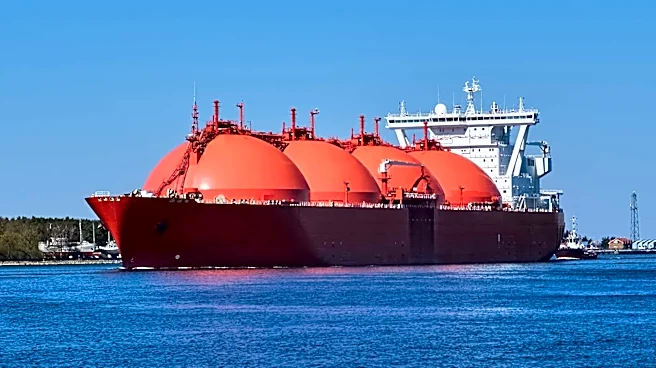
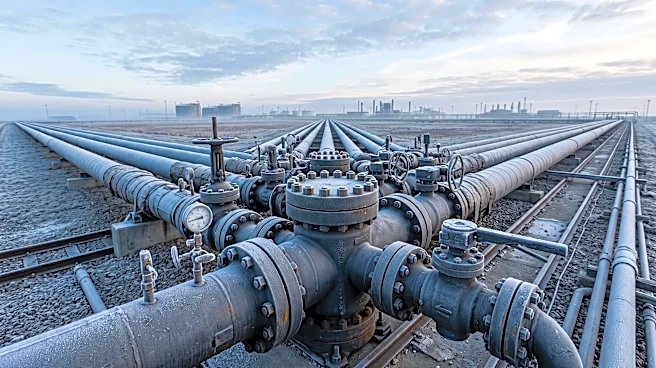
backed by the Trump administration, aims to cover imports, storage, re-gasification, gas transmission, and sales to large consumers on a 'merchant basis.' The initiative has received approval for consideration under the US Trade and Development Agency’s (USTDA) project preparation program and may secure partial financing from the US Development Finance Corporation, supported by export credit guarantees from the US Export-Import Bank for technology, equipment, and services. The project envisions developing the facility in two phases, starting with an LNG terminal and storage facility with four tanks at Port Qasim, followed by a 1,100km pipeline to transport gas upcountry. This development comes after a previous similar project by Energas was abandoned due to changes in energy policy and unresolved issues.
Why It's Important?
This proposed $4.4 billion LNG project, with potential backing from the US Export-Import Bank, carries significant implications for U.S. economic interests and global energy markets. By supporting a U.S.-backed consortium in a major energy infrastructure development, the U.S. government is actively promoting the export of American technology, equipment, and services, thereby boosting U.S. industries and job creation. The project aims to establish a regional LNG storage and trading hub, which could enhance energy security and diversify supply chains for U.S. and Middle Eastern suppliers. This strategic move could also strengthen U.S. influence in the region's energy sector, providing an alternative to other global energy players. Furthermore, the development of such a large-scale LNG facility could stabilize energy prices and ensure reliable supplies, benefiting both the host country and international markets by reducing dependence on volatile import supply chains.
What's Next?
The consortium has secured consent from the Port Qasim Authority for the proposed project site and has filed an application with the Oil and Gas Regulatory Authority (Ogra) for a provisional license. The project's financing structure is planned with a 70:30 debt-to-equity ratio, with GVEP holding a 26% stake, General Mediterranean Holding 24%, and Khanjee Holdings and strategic co-investors 20% each, with local investors holding the remaining 10% in the first phase. The final project cost will be determined after the execution of engineering, procurement, and construction (EPC) contracts. The commercial model is expected to combine long-term tolling and storage agreements, transshipment arrangements, and take-or-pay commitments. Re-gasification tariffs for the domestic market will be submitted to Ogra for approval, while other commercial services will be market-based. The sponsors are also engaging local investors for up to 10% equity participation and expect to attract strategic co-investors, though no binding equity commitments have been confirmed yet.
Beyond the Headlines
The proposed $4.4 billion LNG project, backed by a U.S. consortium and potentially supported by the US Export-Import Bank, represents more than just an economic venture; it's a strategic play in the global energy landscape. The establishment of a regional LNG storage and trading hub could significantly alter energy dynamics, providing a stable supply chain that is less susceptible to geopolitical disruptions. This initiative could also serve as a model for future U.S.-backed energy projects in developing nations, emphasizing the role of private consortia in driving large-scale infrastructure development with government support. The project's focus on a 'merchant basis' for sales to large consumers suggests a market-driven approach, which could foster greater efficiency and competition in the energy sector. This could also lead to a shift in how energy resources are managed and distributed, potentially influencing regional energy policies and fostering greater economic integration.