
What's Happening?
The Wahl-Gruppe, a prominent German automotive dealership group with 31 locations across North Rhine-Westphalia, Hesse, and Rhineland-Palatinate, has filed for insolvency for six of its companies. This
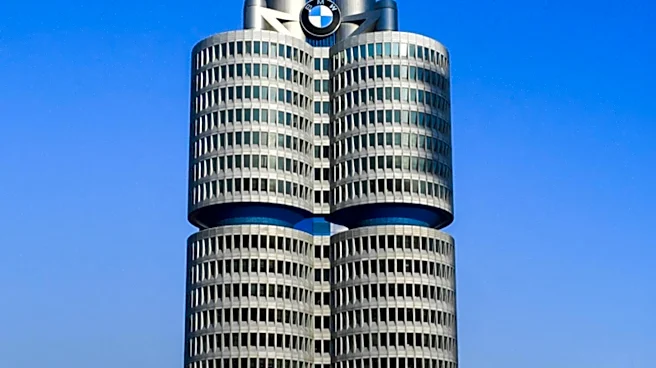
development impacts approximately 1,000 employees. The company, founded in 1898 and known as the world's oldest active BMW dealer, distributes 16 automotive brands, including several from the Stellantis group like Opel, Peugeot, and Citroën. Despite opening a new Mazda dealership in Koblenz in March 2026 and adding eleven new brands in the past two years, the group cited increasing costs and declining sales as reasons for the insolvency. Business operations are currently continuing without restriction, and employee wages are secured through insolvency benefits from the employment agency until the end of November.
Why It's Important?
The insolvency of a major automotive dealership like the Wahl-Gruppe highlights the significant economic pressures facing the automotive sector, even in a robust market like Germany. The stated reasons—rising costs and reduced consumer spending on vehicles—reflect broader economic trends that could impact the U.S. automotive market. While this specific event is in Germany, it serves as a cautionary tale for U.S. dealerships and manufacturers, indicating a potential shift in consumer behavior where individuals and businesses are becoming more cautious with large purchases due to increased general living costs. This could lead to a slowdown in new car sales and a greater focus on affordability, potentially affecting the profitability and operational strategies of U.S. automotive companies and their supply chains.
What's Next?
The Wahl-Gruppe's restructuring process will be overseen by a team from the law firm Schultze & Braun. General authorized representative Dr. Jürgen Erbe expressed confidence in the success of the restructuring efforts, stating that internal steps have been outlined and will be further developed and discussed with involved parties. It remains uncertain whether specific dealerships will close or if job reductions will occur. The immediate focus will be on stabilizing operations and developing a comprehensive plan to address the financial challenges. The outcome of this restructuring could set a precedent for how other automotive groups in similar financial distress manage their recovery, potentially influencing future business models and employment practices within the industry.
Beyond the Headlines
This insolvency underscores a deeper shift in consumer priorities and economic resilience. The statement from CEO Thomas Wahl, noting that customers have less disposable income due to generally increased costs and are therefore 'downshifting' their vehicle purchases, points to a broader economic sentiment. This trend could accelerate the adoption of more economical vehicle options, impact the demand for luxury segments, and potentially drive innovation in affordable and sustainable transportation solutions. Furthermore, the situation highlights the vulnerability of even long-established businesses to rapid economic changes and consumer behavior shifts, prompting a reevaluation of traditional business models in the face of evolving market dynamics and cost pressures.