





What's Happening?
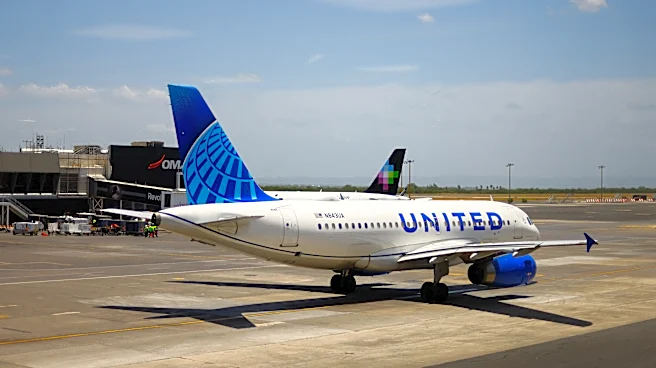
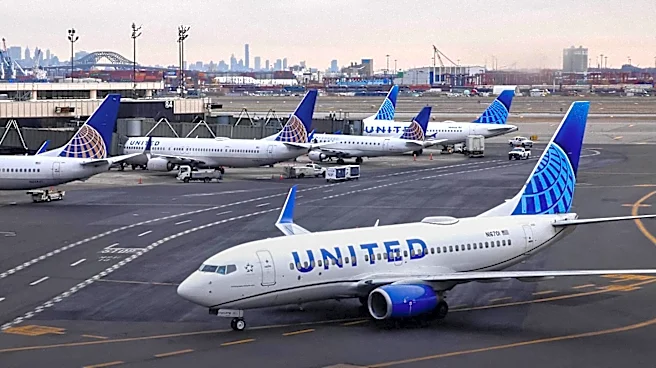
United Airlines is set to significantly expand its operations at Dulles International Airport (IAD) following a $22.5 billion redevelopment plan. The project, unveiled at the White House, aims to transform IAD into a world-class airport, enhancing both
international and domestic flight capacities. The redevelopment includes expanding the main terminal, adding new concourses, and improving passenger facilities. United plans to move all international flights to the renovated Concourse A and expanded Concourse Z, while domestic operations will be supported by the under-construction Concourse E and future Concourse B. This expansion is expected to increase United's gate count by 25% by 2045, allowing for more flights and destinations.
Why It's Important?
The redevelopment of Dulles International Airport is crucial for United Airlines as it seeks to expand its international footprint and improve passenger experience. The project addresses space constraints and congestion issues at Newark Liberty International Airport, United's New York-area hub, by shifting some operations to IAD. This strategic move could enhance United's competitive edge in the aviation industry, potentially leading to increased market share and revenue. However, the high cost of the project, estimated at $22.5 billion, raises concerns about potential increases in airport fees and airfares, which could impact travelers and the airline's profitability.
What's Next?
As the redevelopment progresses, United Airlines will likely focus on optimizing its operations at Dulles to maximize the benefits of the expanded facilities. The airline may introduce new routes and increase flight frequencies to capitalize on the additional capacity. Stakeholders, including the Metropolitan Washington Airports Authority, will need to balance the expansion with preserving the architectural integrity of the iconic Eero Saarinen-designed main terminal. The project's success will depend on securing necessary funding and managing costs to avoid burdening passengers with higher fees.
Beyond the Headlines
The redevelopment of Dulles International Airport could have broader implications for the U.S. aviation industry, setting a precedent for future airport modernization projects. It highlights the need for infrastructure investments to accommodate growing passenger demand and improve operational efficiency. Additionally, the project underscores the importance of balancing modernization with historical preservation, as seen in the efforts to maintain the architectural significance of the main terminal. This development may also influence regional economic growth by enhancing connectivity and attracting more international travelers to the Washington, D.C. area.