





What's Happening?
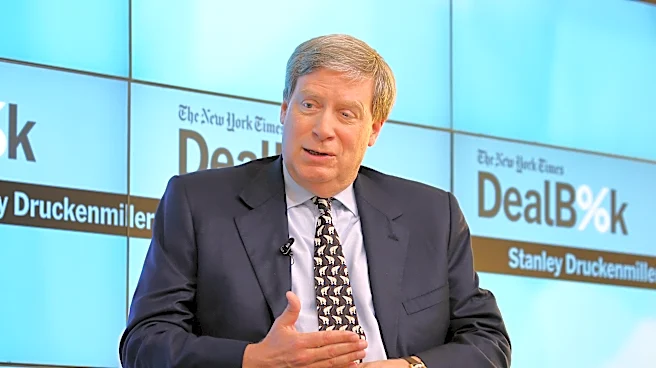
Stanley Druckenmiller's Duquesne Family Office sold all 19,200 shares of Thermo Fisher Scientific, valued at approximately $10 million, representing 0.2% of its 13F stocks, according to a November 16 filing for the quarter ending September 30, 2026. This
move was part of a broader trend where 26 out of 460 major funds, each managing over $1 billion in U.S. stocks, divested from Thermo Fisher Scientific. Conversely, 15 other large funds acquired shares in the company during the same period. Notable sellers included Viking Global, which cut its holding by 53% (approximately $687 million), Farallon Capital, and D1 Capital, both reducing their stakes by 58%. On the buying side, Lone Pine Capital initiated a new position of 996,686 shares, worth about $673 million, making it their ninth-largest holding, while Castle Hook Partners increased its stake by 408%.
Why It's Important?
The significant divergence in investment strategies among major funds regarding Thermo Fisher Scientific highlights differing outlooks on the company's future performance and the broader life sciences tools sector. While Druckenmiller's exit was relatively small in proportion to his overall holdings, the substantial sales by other large funds like Viking Global indicate a cautious stance from some institutional investors. Conversely, the aggressive buying by funds such as Lone Pine Capital and Castle Hook Partners suggests strong conviction in Thermo Fisher's growth potential, especially given the company's raised 2026 outlook and improving demand indicated by competitors like Danaher. This split sentiment can lead to increased volatility in the stock, as large-scale buying and selling pressures contend, impacting individual investors and market analysts who often look to these major funds for directional cues.
What's Next?
The conflicting positions taken by major funds on Thermo Fisher Scientific will likely lead to continued scrutiny of the company's financial performance and market conditions. Investors will be closely watching upcoming earnings reports and guidance from Thermo Fisher and its peers, such as Danaher, to determine which investment thesis proves more accurate. The market's reaction to these developments could influence future capital allocation decisions by other institutional investors. If Thermo Fisher's performance aligns with the optimistic outlook of the buyers, it could validate their investment strategy and potentially lead to further inflows. Conversely, if the concerns of the sellers materialize, it could prompt a re-evaluation of the stock's valuation and growth prospects across the sector.
Beyond the Headlines
This scenario underscores the complex decision-making processes within large investment firms, where even with extensive research and resources, consensus is not always achieved. The differing views on Thermo Fisher Scientific reflect various analytical frameworks, risk appetites, and short-to-long-term outlooks. It also highlights the 'information lag' inherent in 13F filings, which only reveal positions 45 days after the quarter ends, meaning some of these funds may have already adjusted their holdings. This dynamic emphasizes that following the moves of 'big money' requires a critical understanding of their underlying rationales and the timing of their disclosures, rather than simply replicating their trades. The ongoing debate also points to the broader health and growth trajectory of the drug-research and lab equipment market, a critical component of the healthcare industry.