



What's Happening?
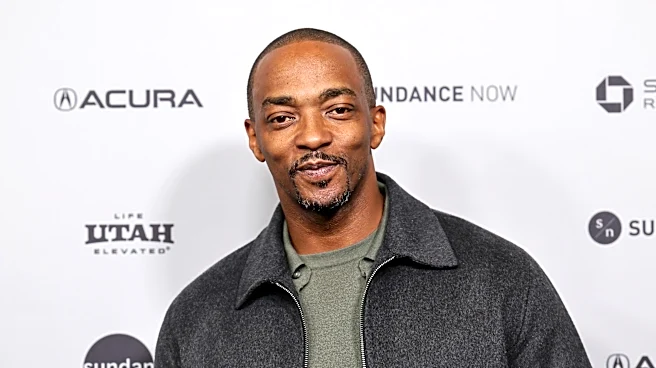
Actor Anthony Mackie, 48, recently shared his difficulties in the dating world as an older man during an appearance on 'Watch What Happens Live with Andy Cohen.' When asked about potential remarriage, Mackie stated, 'I'm an older man and I feel like being
an older man, women don't like older men.' This revelation surprised host Andy Cohen and co-star Jamie Dornan, who questioned his assertion, especially given his celebrity status and financial success. Dornan humorously asked, 'Older men with Marvel money?' and Cohen added, 'Older, jacked men who look like him?' However, Mackie maintained his stance, insisting that despite his looks and wealth, dating is harder for him now, suggesting women prefer 'younger, fruitful men.' His comments have since ignited a significant debate across social media platforms, particularly on X (formerly Twitter), with users sharing diverse opinions on age and dating preferences.
Why It's Important?
Anthony Mackie's candid remarks highlight a broader societal conversation about ageism and dating dynamics, particularly for men in the public eye. While his specific experience is unique due to his celebrity, his comments resonate with discussions about evolving perceptions of attractiveness and desirability across different age groups. The ensuing social media debate underscores the varied perspectives on age in relationships, challenging traditional notions that older men are universally preferred. This discussion can influence how individuals perceive their own dating prospects as they age and may encourage a re-evaluation of societal expectations regarding age-appropriate relationships. For the entertainment industry, it also offers a glimpse into the personal lives of public figures, often revealing relatable struggles despite their perceived advantages.
What's Next?
The debate sparked by Anthony Mackie's comments is likely to continue across social media and potentially in other public forums, as individuals weigh in on the complexities of dating and age. This conversation may prompt other celebrities or public figures to share their own experiences, further broadening the dialogue. For Mackie himself, his honesty could either endear him to some who relate to his struggles or draw criticism from those who disagree with his generalizations. The discussion might also lead to more nuanced explorations of dating preferences, considering factors beyond age, such as personality, financial stability, and emotional maturity. It could also influence future discussions on age representation in media and how older individuals are portrayed in romantic contexts.
Beyond the Headlines
Beyond the immediate discussion of dating preferences, Mackie's comments touch upon deeper societal anxieties related to aging, self-worth, and perceived desirability. In a culture that often valorizes youth, his statement reflects a potential pressure, even for successful individuals, to conform to certain ideals of attractiveness. The debate also implicitly questions gendered expectations in dating; while older men traditionally held a perceived advantage, Mackie's view suggests a shift or at least a more complex reality. This could lead to broader conversations about the impact of social media on dating norms, the pressures faced by men as they age, and the evolving landscape of romantic relationships in the 21st century, where traditional roles and preferences are increasingly challenged and redefined.