


What's Happening?
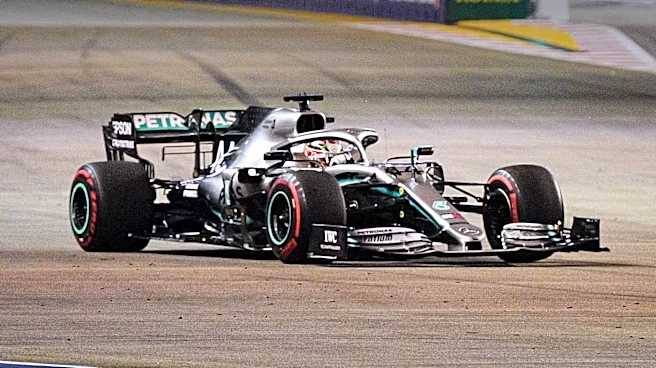
The Federation Internationale de l’Automobile (FIA) has indicated that entertainment and other outdoor activities during the Singapore Grand Prix weekend may face restrictions if the current haze blanketing the city-state worsens. Singapore has been experiencing
weeks of smoke, with air quality currently in the 'unhealthy' range, just ahead of the race weekend. This haze is attributed to Indonesia’s most intense fires in over a decade. Despite the poor air quality, the FIA spokesperson stated that track activity and the staging of the F1 night race are not expected to be threatened. Air quality levels are being monitored by local authorities, and contingency measures are in place. The FIA is following recommendations from local authorities and working closely with them to safeguard the health of F1 teams. In 2019, when similar haze conditions were present during the Grand Prix, organizers had first aid on standby and provided N95 masks.
Why It's Important?
This situation highlights the significant impact of environmental factors, such as regional haze, on major international events and public health. For the U.S. sports and entertainment industries, it serves as a reminder of the increasing need to incorporate environmental risk assessments and contingency planning into event management, especially for outdoor spectacles. The potential curbing of entertainment activities, while the main race proceeds, underscores a prioritization of core event integrity over peripheral attractions, which could influence how large-scale events are structured and insured globally. The health implications for athletes, staff, and spectators due to poor air quality are a critical concern, potentially leading to stricter health protocols and air quality monitoring standards for future international events, including those involving U.S. participants or hosted in the U.S. This also brings attention to the broader issue of transboundary pollution and its economic and social consequences.
What's Next?
Local authorities and the FIA will continue to monitor air quality levels closely. While no specific threshold for activating restrictions on entertainment has been publicly stated, contingency measures are in place. The ongoing haze situation, driven by southeasterly to southerly winds drifting smoke from Indonesian fires towards Singapore, suggests that conditions could fluctuate. Organizers will likely maintain a readiness to implement health and safety protocols, similar to 2019, which included having first aid available and providing N95 masks. The decision to curb entertainment activities will depend on the severity and persistence of the haze. This event may prompt further discussions and collaborations between Singapore and neighboring countries on addressing the root causes of transboundary haze, potentially leading to more robust regional environmental policies.
Beyond the Headlines
The recurring issue of haze impacting major events like the Singapore Grand Prix points to a deeper, systemic environmental challenge in Southeast Asia: the persistent problem of transboundary pollution from agricultural and forest fires. This situation underscores the interconnectedness of environmental health and economic activity, demonstrating how ecological issues in one region can have significant ripple effects on international events, tourism, and public health in another. The FIA's response, prioritizing the race while considering entertainment curbs, reflects a pragmatic approach to managing unavoidable environmental challenges, but it also highlights the vulnerability of large-scale public gatherings to climate-related phenomena. This event could serve as a case study for other global cities and event organizers in developing comprehensive strategies for environmental risk management, including long-term solutions for mitigating the sources of pollution and adapting to changing environmental conditions.