


What's Happening?
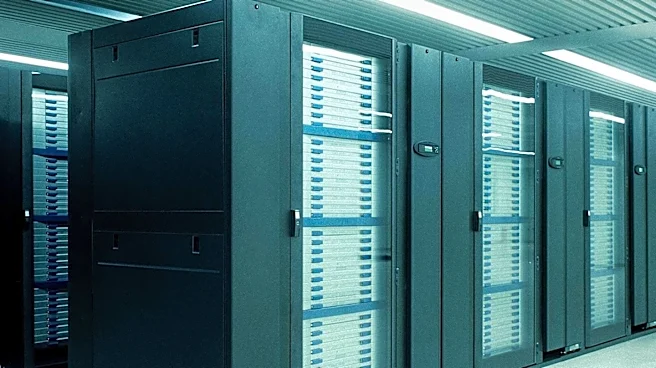
Jim Cramer, a prominent figure in the CNBC Investing Club, has stated that the artificial intelligence (AI) trade is 'currently broken.' This declaration comes amidst growing concerns regarding a potential slowdown in data center activity. Cramer, along
with Jeff Marks, discussed this development and its implications for the market, analyst calls, and the holdings within their Charitable Trust. Their discussions provide insight into how they evaluate market headlines and make decisions on stock actions. The sentiment reflects a shift in perspective on the previously booming AI sector, suggesting that the rapid growth and investment seen in AI-related companies might be facing headwinds due to infrastructure limitations or reduced demand for data center expansion.
Why It's Important?
Cramer's assessment of the AI trade as 'broken' carries significant weight for U.S. investors and the technology sector. The AI industry has been a major driver of market growth and innovation, attracting substantial investment. A slowdown in data center development, which is crucial for supporting AI operations, could impact the profitability and expansion plans of numerous tech companies. This could lead to a re-evaluation of AI stock valuations, potentially affecting investment strategies and market stability. Companies involved in AI development, cloud computing, and data center infrastructure could experience financial repercussions, while investors might shift their focus to other sectors or adopt more cautious approaches to AI-related investments. The broader economic impact could include a deceleration in tech sector growth and a reassessment of future technological advancements reliant on robust data center capabilities.
What's Next?
Following Cramer's remarks, market participants will likely closely monitor data center performance indicators and the financial reports of companies heavily invested in AI and cloud infrastructure. Investors may adjust their portfolios, potentially divesting from AI stocks perceived as overvalued or vulnerable to a data center slowdown. Analysts will likely issue revised forecasts for the AI sector, and companies might need to recalibrate their growth projections and investment strategies. The situation could also prompt discussions among industry leaders and policymakers about the need for more resilient and scalable data center infrastructure to support the continued advancement of AI technologies. The coming weeks and months will reveal whether this 'broken' status is a temporary setback or a more prolonged challenge for the AI trade.
Beyond the Headlines
The pronouncement of the AI trade being 'broken' extends beyond immediate market fluctuations, touching upon the fundamental infrastructure supporting the digital economy. A slowdown in data center expansion highlights a critical bottleneck in the advancement of AI and other data-intensive technologies. This could lead to a re-evaluation of the sustainability of rapid technological growth without corresponding infrastructure development. It also raises questions about the environmental impact of data centers, which consume vast amounts of energy, and whether sustainability concerns are contributing to the slowdown. Furthermore, it could spur innovation in more energy-efficient data processing methods or distributed computing models. The long-term implications might include a more measured and strategic approach to AI development, prioritizing efficiency and infrastructure resilience over sheer speed of expansion, potentially reshaping the future landscape of the technology industry.