
What's Happening?
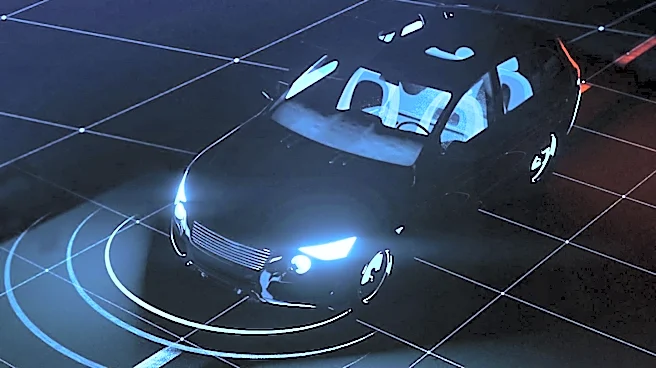
Mobileye, a global leader in Physical AI and a majority-owned subsidiary of Intel, is advancing its autonomous driving solutions with the development of HawkEye, its next-generation model for close-range 3D perception. HawkEye is an end-to-end 3D perception model designed
to understand the immediate environment around an autonomous vehicle. It integrates data from multiple surround cameras to create a unified 3D representation of the scene, which then outputs detailed information about the environment's 3D structure, parking spots, road layout, markings, and road and camera conditions. This transformer-based model, built on a BEVFormer-based architecture, serves as the crucial perception layer for automated parking and low-speed maneuvering. The accuracy and robustness of HawkEye are directly linked to the safety of Mobileye's autonomous driving products. The company is actively developing both the current iteration of HawkEye and its future generations, indicating a dynamic and evolving approach to autonomous vehicle technology.
Why It's Important?
The development of advanced perception systems like HawkEye is critical for the widespread adoption and safety of autonomous vehicles in the U.S. and globally. By providing highly accurate and robust 3D environmental understanding, Mobileye's technology aims to enhance the reliability of automated parking and low-speed maneuvering, which are key features for consumer acceptance and regulatory approval. This innovation can significantly impact the automotive industry by accelerating the transition from advanced driver-assistance systems (ADAS) to fully autonomous driving. Improved perception capabilities reduce the risk of accidents, potentially leading to safer roads and more efficient transportation. For consumers, this means more reliable and convenient autonomous features in their vehicles. For manufacturers, it offers a pathway to integrate cutting-edge AI into their product lines, maintaining competitiveness in the rapidly evolving autonomous vehicle market.
What's Next?
Mobileye's ongoing development of HawkEye suggests a continuous push towards refining and expanding the capabilities of its autonomous driving technology. Future iterations of HawkEye are already in progress, indicating that the company plans to introduce more sophisticated perception solutions. This could lead to enhanced performance in complex urban environments, improved all-weather capabilities, and more seamless integration with other autonomous driving modules. As the technology matures, it is likely to be deployed in a wider range of vehicles, from passenger cars to commercial fleets, impacting various segments of the transportation industry. The company's focus on both current and future generations of HawkEye implies a strategic roadmap aimed at maintaining its leadership in Physical AI and autonomous systems, potentially influencing industry standards and accelerating the timeline for fully autonomous vehicles on public roads.
Beyond the Headlines
The advancement of technologies like HawkEye extends beyond immediate automotive applications, hinting at broader implications for artificial intelligence and robotics. Mobileye's expertise in computer vision, software, and hardware for autonomous driving is directly transferable to other domains, including humanoid robots. This signifies a long-term vision where the intelligent perception capabilities developed for vehicles could power a new generation of robotic systems designed to interact with and navigate complex real-world environments. The underlying principles of Physical AI, which Mobileye champions, could become foundational for various industries seeking to automate tasks that require nuanced understanding of physical spaces. This evolution could lead to significant societal shifts, from enhanced accessibility for individuals with mobility challenges to increased efficiency in logistics and manufacturing, ultimately expanding the reach and impact of AI in everyday life.