
What's Happening?
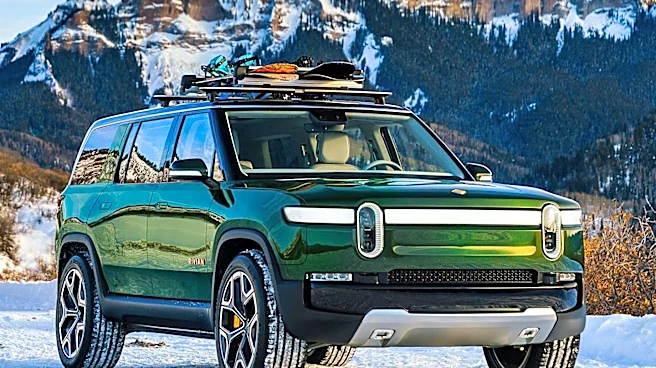
Rivian has begun rolling out RivianOS 2, its most significant in-car software update since the R1 vehicle first shipped. This update unifies the software stack across all of Rivian's vehicle lineup, including
first-generation R1s, second-generation R1s, and the new R2 models. The update, version 2026.31, introduces a rebuilt user interface, Unreal Engine 5 graphics for R2 and Gen 2 R1 vehicles, and real-time navigation alerts for police presence and speed cameras, sourced from local authorities, third-party providers, and community contributions. Additionally, RivianOS 2 incorporates a deeper AI layer called Unified Intelligence, which powers the 'Hey Rivian' assistant and supports hybrid edge computing for low-latency processing. The update also enhances user control over data privacy, allowing owners to manage hotword wake-words, location sharing, and driver-profile data.
Why It's Important?
This software overhaul is crucial for Rivian as it aims to streamline its technological infrastructure and enhance the user experience across its growing vehicle portfolio. Unifying the software stack is a strategic move that can lead to more efficient development, faster deployment of new features, and a more consistent experience for customers, which is vital for a company expanding into higher-volume segments like the R2. The introduction of advanced features like real-time navigation alerts and enhanced AI capabilities positions Rivian to compete more effectively with established automotive players and other EV manufacturers. The focus on data privacy and user control also addresses growing consumer concerns about vehicle data, potentially building greater trust and loyalty among its customer base. This update could significantly influence customer perception and adoption of Rivian vehicles, especially as the company scales its operations and introduces new models.
What's Next?
The immediate next step involves the continued rollout of RivianOS 2 to eligible R1 and R2 vehicles, with users experiencing the new interface and features. Rivian will likely monitor user feedback and performance data to identify areas for further refinement and future updates. The success of this unified software approach will be critical as Rivian prepares for the mass production and delivery of its R2 model, which is positioned as a volume play. The company's ability to maintain a cutting-edge software experience will be a key differentiator in the competitive EV market. Furthermore, the integration of advanced AI and real-time data services suggests a future where Rivian vehicles become more connected and intelligent, potentially leading to new subscription services and enhanced safety features. The impact of this software update on Rivian's market position and its ability to attract new customers will be closely watched.
Beyond the Headlines
The unification of Rivian's software stack represents a broader trend in the automotive industry towards software-defined vehicles, where the digital experience is as critical as hardware performance. By consolidating its software foundation, Rivian is not just improving current vehicles but also laying the groundwork for future innovations, potentially enabling more seamless integration of autonomous driving features, advanced connectivity, and personalized services. The use of Unreal Engine 5 for graphics in newer models highlights the increasing importance of immersive and intuitive user interfaces in modern vehicles, blurring the lines between automotive and consumer electronics. The real-time navigation alerts, while enhancing convenience, also raise questions about data collection and privacy, even with Rivian's stated commitment to user control. This move signifies Rivian's ambition to be a technology leader, not just an EV manufacturer, by creating a cohesive and advanced digital ecosystem within its vehicles.