


What's Happening?
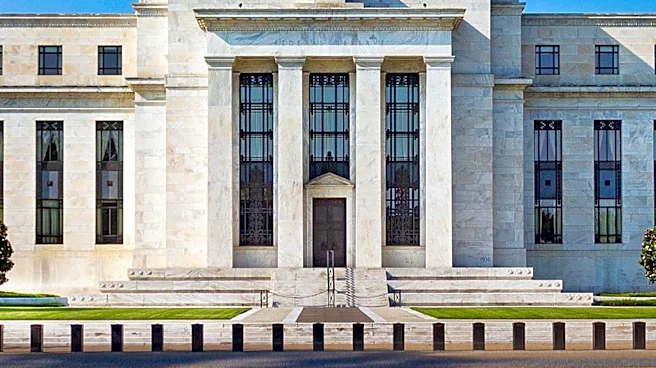
On Fox Business, host Stuart Varney engaged in a discussion with market expert Jeff Sica regarding the Federal Reserve's potential decision to raise interest rates in December. Sica, CEO of Circle Squared Alternative Investments, asserted that the Fed would
indeed raise rates, despite a morning rally in the Dow and S&P 500. Sica expressed skepticism about the effectiveness of such a hike in controlling inflation, predicting it would instead harm the economy, particularly impacting debt and a 'wall of refinances.' The discussion also touched upon the inflation report, which showed consumer prices rising 0.4% in October and core inflation at 0.3% for the third consecutive month.
Why It's Important?
The Federal Reserve's interest rate decisions have a profound impact on the U.S. economy, affecting everything from borrowing costs for consumers and businesses to the overall health of financial markets. A rate hike in December, as predicted by Jeff Sica, could make credit card debt more expensive for millions of Americans, given that most credit cards have variable rates. Homeowners with adjustable-rate mortgages (ARMs) could also face higher monthly payments, potentially straining household budgets. Businesses might find it more costly to borrow for expansion, which could slow economic growth. The debate over the effectiveness of rate hikes in combating inflation highlights a critical economic challenge: how to cool down prices without triggering a recession. If Sica's prediction of ineffectiveness proves true, the U.S. economy could face the dual burden of high inflation and a struggling economy, impacting employment and consumer spending.
What's Next?
The Federal Reserve's next meeting is scheduled to begin on December 8, with a decision on interest rates expected on December 9. Market participants and the public will be closely watching for the Fed's announcement, which will dictate the immediate trajectory of borrowing costs. If the Fed raises rates, consumers should prepare for potentially higher payments on credit cards and ARMs. Financial institutions will adjust their lending rates accordingly, influencing mortgage rates and business loans. The economic data, particularly future inflation reports, will continue to be a key factor in the Fed's subsequent decisions. There is also a possibility of increased public debate and political pressure on the Fed, especially if the rate hikes lead to significant economic slowdowns or increased financial hardship for American households.
Beyond the Headlines
The discussion surrounding the Fed's actions extends beyond immediate economic indicators to deeper structural issues within the U.S. economy. Jeff Sica's concern that rate hikes will be 'completely ineffective' in addressing inflation suggests a belief that current inflationary pressures stem from factors beyond monetary policy, such as supply chain disruptions or fiscal policies. This perspective implies that a purely monetary approach might not solve the root causes of inflation and could instead exacerbate other economic problems. The potential for a 'wall of refinances' also highlights the vulnerability of a significant portion of the housing market to rising interest rates, which could trigger broader financial instability. This situation underscores the complex interplay between monetary policy, consumer debt, and housing market stability, posing a significant challenge for policymakers aiming to achieve sustainable economic growth and price stability.