







What's Happening?
Cisco and NVIDIA are collaborating to provide an enterprise-ready solution for local AI resilience and governance, integrating Cisco Cloud Control with NVIDIA DGX Station for Windows. This partnership aims to address the operational challenges of managing
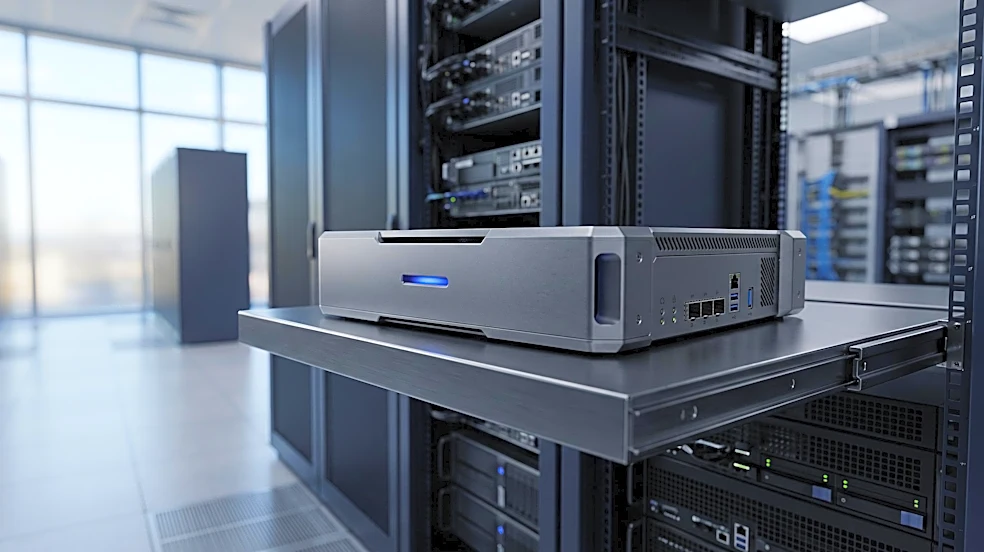
local AI workloads, particularly in understanding agent behavior, request patterns, and applying security policies. Cisco Cloud Control offers an end-to-end solution to ensure AI workloads on these machines are resilient to risks, enforcing user-case-specific policy frameworks and providing observability into all AI activity. NVIDIA DGX Station for Windows brings powerful hardware for local AI, enabling individuals and teams to leverage AI locally while ensuring data security and cost predictability.
Why It's Important?
This collaboration is significant for businesses adopting AI, as it tackles critical issues of security, governance, and operational control over local AI deployments. As AI shifts from chat-based interactions to agentic workflows, the need for robust security and policy enforcement becomes paramount. The integration of Cisco Cloud Control with NVIDIA's local AI platforms provides organizations with a unified policy layer to define and monitor how autonomous systems operate, mitigating risks such as unwanted behavior drift, malicious actions, or security vulnerabilities. This ensures that enterprises can leverage the power of local AI while maintaining control over their data and operations, which is crucial for compliance and trust in AI systems.
What's Next?
The combined solution from Cisco and NVIDIA is designed to enable organizations to deploy and manage local AI more securely and efficiently. Future developments will likely focus on further refining the policy frameworks, enhancing observability features, and expanding the integration capabilities to cover a wider range of AI workloads and environments. The ability to instantly update policies across an entire AI fleet, as highlighted by the example of mitigating a 'rogue agent,' suggests a move towards more dynamic and responsive AI governance. This will allow businesses to adapt quickly to new threats and operational requirements, fostering greater confidence in the adoption of AI technologies across various sectors.
Beyond the Headlines
This partnership signifies a broader trend in the technology industry towards embedding security and governance directly into AI infrastructure. The emphasis on 'local AI resilience' and 'deterministic governance' reflects a growing recognition that as AI becomes more pervasive, control mechanisms must be sophisticated enough to manage complex, distributed AI systems. This has implications for data privacy, intellectual property protection, and the ethical deployment of AI, particularly in sensitive industries. The ability to monitor and control AI agents at a granular level could also influence the development of future AI regulations, as it provides a framework for accountability and transparency in AI operations, moving beyond theoretical discussions to practical implementation.