




What's Happening?
Gardeners in San Diego are being advised to adopt smart fall planting strategies to mitigate the effects of persistent heat, even as the calendar turns to autumn. Despite September being over, October can still bring high temperatures, posing challenges
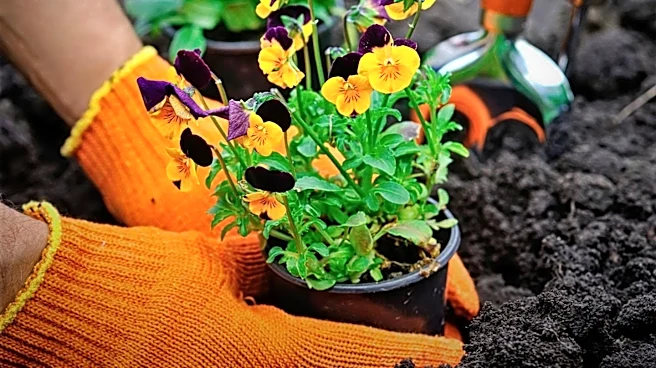
for new plants. The primary recommendation is to avoid rushing to plant new seedlings if the forecast predicts a heatwave, as new transplants are more vulnerable to extreme heat due to their undeveloped root systems. Waiting for cooler temperatures can significantly reduce transplant shock and the need for excessive watering. Additionally, planting new vegetation in the late afternoon or early evening allows plants to acclimate during cooler nighttime hours before facing the full sun. Ensuring the root ball and surrounding soil are moist during planting and providing thorough initial watering are also crucial steps for successful establishment. The advice emphasizes creating resilient conditions for plants rather than solely increasing water usage.
Why It's Important?
This guidance is important for U.S. gardeners, particularly in regions like San Diego that experience prolonged warm weather, as it promotes sustainable gardening practices and efficient water use. By advising against planting during heatwaves and suggesting strategic timing, the recommendations help conserve water, a critical resource in many parts of the U.S. facing drought conditions. It also reduces plant loss, saving gardeners time and money on replacements. The emphasis on soil health, through practices like adding compost and mulch, contributes to long-term garden vitality and reduces reliance on external inputs. This approach can lead to more successful harvests and aesthetically pleasing landscapes, benefiting both individual gardeners and the broader community by fostering greener, more sustainable urban environments. Understanding microclimates within a garden further empowers individuals to make informed decisions tailored to their specific conditions.
What's Next?
Gardeners in San Diego and similar climates are encouraged to monitor weather forecasts closely before undertaking new planting projects. The immediate next step for many will be to assess their garden beds, consider soil amendments like compost, and apply mulch to protect existing plants and soil from heat and moisture loss. Educational efforts may continue to promote these water-wise and heat-resilient gardening techniques, potentially through local gardening clubs, workshops, and online resources. As climate patterns continue to shift, these adaptive strategies are likely to become standard practice, influencing seed and plant sales, as well as the types of gardening tools and supplies in demand. The long-term outlook suggests a greater focus on drought-tolerant and heat-resistant plant varieties in regional nurseries.
Beyond the Headlines
The recommendations extend beyond immediate gardening tips, highlighting a broader shift towards climate-adaptive living in the U.S. As urban areas expand and climate change impacts become more pronounced, the principles of 'right plant, right place' and optimizing soil health become essential for urban resilience. This approach fosters a deeper connection between individuals and their local ecosystems, encouraging a more mindful interaction with the environment. Ethically, it underscores a responsibility to conserve natural resources and adapt human activities to environmental realities. Culturally, it could lead to a resurgence of community gardening initiatives focused on sustainability and local food production, strengthening community bonds and promoting environmental stewardship. The long-term implication is a move towards more self-sufficient and ecologically integrated urban landscapes.