




What's Happening?
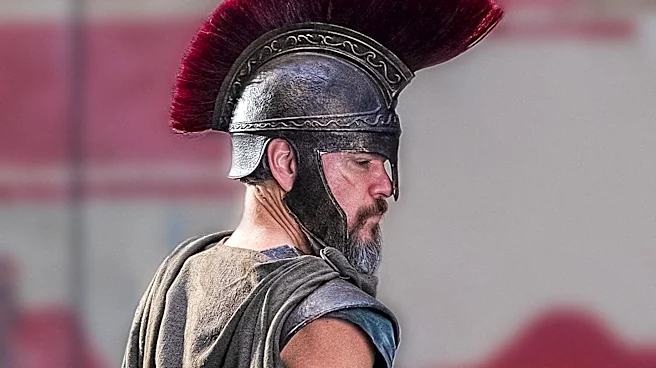
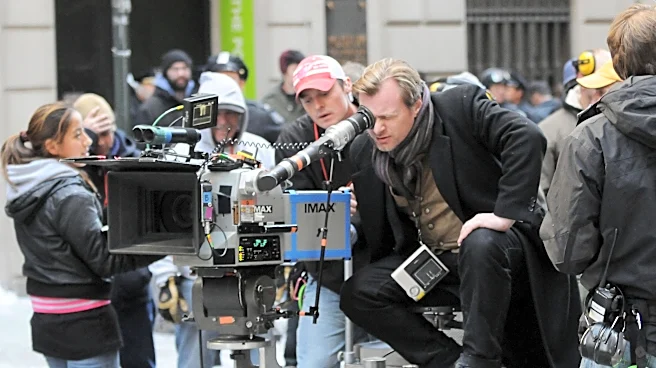
Christopher Nolan's film adaptation of 'The Odyssey' largely relies on analog filmmaking techniques and practical effects, augmented by IMAX cinematography. The production team, including cinematographer Hoyte van Hoytema, costume designer Ellen Mirojnick,
production designer Ruth De Jong, sound editor Craig Henighan, makeup artist Luisa Abel, and VFX supervisor Andrew Jackson, detailed their methods for bringing iconic scenes to life. For the Cyclops Polyphemus, scenes were shot in Nestor’s Cave in Greece, utilizing firelight and a 36-foot fiberglass marionette, with minimal CG for the creature's face. Circe's hovel was a fiberglass fabrication in Scotland, illuminated by live fire and natural daylight, with practical effects and prosthetics used for the sailors' transformation into pigs. The Hades sequence was filmed on a black sand beach in Iceland, burying actors in sand with snorkels. For Scylla and Charybdis, jet skis created a whirlpool effect, enhanced with CG, while Scylla's attack heavily used sound design with celery snaps for jaws.
Why It's Important?
Nolan's commitment to practical effects and analog filmmaking in 'The Odyssey' stands in contrast to the prevalent use of extensive CGI in modern blockbusters. This approach emphasizes a tactile, immersive cinematic experience, which can resonate deeply with audiences seeking authenticity and tangible visual storytelling. The use of IMAX throughout the film further enhances this immersion, pushing the boundaries of large-format cinematography despite technical challenges like the 300-pound soundproofing blimp obstructing sight lines and limited take durations. This methodology not only showcases the artistry and ingenuity of the filmmaking team but also reinforces Nolan's signature style, which often prioritizes in-camera effects to create a more grounded and impactful visual narrative. It also highlights the enduring value of traditional filmmaking techniques in an increasingly digital age.
What's Next?
The detailed insights into the production of 'The Odyssey' offer a masterclass in practical filmmaking and innovative problem-solving. This approach may influence other filmmakers to explore similar methods, potentially leading to a resurgence of practical effects in large-scale productions. The film's reception, particularly regarding its visual and auditory fidelity achieved through these techniques, will be closely watched by the industry. Success could further solidify the argument for balancing practical effects with digital enhancements, rather than relying solely on CGI. Additionally, the technical challenges overcome, such as shooting dialogue with large IMAX cameras, could inspire advancements in filmmaking equipment and techniques to better integrate high-fidelity formats with on-set practicalities.
Beyond the Headlines
Nolan's 'The Odyssey' exemplifies a philosophical stance on filmmaking that values physical presence and tangible interaction over purely digital creation. This choice has broader implications for the craft of cinema, emphasizing the importance of on-set artistry, detailed production design, and the collaborative ingenuity of various departments. The film's reliance on practical effects also contributes to a unique aesthetic that can differentiate it in a crowded market of CGI-heavy spectacles. Ethically, it speaks to the debate about the 'realness' of cinematic images and the audience's perception of authenticity. Culturally, it reinforces the idea that classic storytelling can be revitalized through innovative yet traditional means, connecting ancient narratives with modern technological capabilities in a way that feels both epic and grounded.