






What's Happening?
Molteni&C is transforming the traditional concept of a wardrobe into an integrated architectural system, moving beyond its role as a mere storage unit. The company's approach, particularly with its Gliss Master and Master Dressing systems, emphasizes
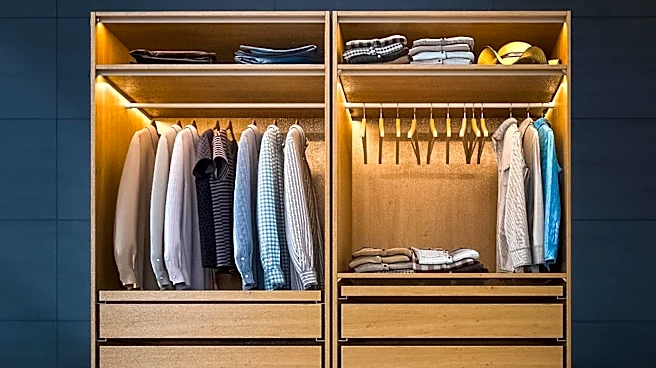
modularity, invisible technology, and coherent finishes to create bespoke interior solutions. This evolution reflects a broader trend in domestic interior design where customization is paramount, and storage functions as an architectural tool to organize space. Molteni&C's philosophy, championed by Vincent Van Duysen, focuses on understanding user lifestyles and habits to create highly individualized solutions, encompassing spatial configurations, opening systems, internal layouts, materials, finishes, lighting, and accessories. The Gliss Master system, for instance, offers diverse door systems and internal configurations, allowing for everything from discreet built-in wardrobes to expansive dressing rooms, all while maintaining visual continuity. The Master Dressing system further extends this concept into fully architectural dressing environments, complete with coordinated finishes, illuminated shelves, and dedicated vanity areas, effectively redefining how bedrooms are organized.
Why It's Important?
This shift in wardrobe design by Molteni&C signifies a significant evolution in the U.S. interior design and luxury furniture markets. By treating wardrobes as architectural elements rather than standalone furniture, the company is catering to a growing demand for highly customized and integrated living spaces. This approach impacts U.S. consumers seeking sophisticated, functional, and aesthetically cohesive home environments, particularly in high-end residential developments and custom-built homes. For interior designers and architects, Molteni&C's systems offer greater flexibility and creative possibilities, allowing them to seamlessly integrate storage solutions into the overall design narrative of a home. The emphasis on invisible technology and premium materials also sets new benchmarks for quality and innovation in the sector, potentially influencing design trends and consumer expectations across the U.S. market. Furthermore, this trend highlights a broader societal shift towards maximizing existing spaces and investing in durable, multi-functional home elements that enhance daily living experiences.
What's Next?
Molteni&C is expected to continue expanding its wardrobe ecosystem, with recent developments including modular wardrobe islands and the Parallel accessory collection. These additions aim to further enhance the possibilities for configuring interiors with consistent materials and modular organization, reinforcing the idea of the wardrobe as a complete, integrated system. The company's focus on translating everyday rituals into spatial design suggests future innovations will likely center on even more personalized and user-centric features, such as advanced smart home integrations for lighting and climate control within wardrobes, or further customization options for specific items like jewelry or watches. This trend could also lead to increased collaboration between luxury furniture manufacturers and smart home technology providers to create truly seamless and intelligent living spaces. As consumer demand for bespoke and integrated solutions grows, other high-end furniture brands in the U.S. market may follow suit, adopting similar architectural approaches to storage and interior design.
Beyond the Headlines
Beyond the immediate design implications, Molteni&C's approach to wardrobes touches upon deeper cultural and lifestyle shifts in the U.S. The move towards highly personalized and integrated living spaces reflects a desire for homes that are not just functional but also deeply reflective of individual identities and daily routines. This trend challenges the traditional consumerist model of constantly acquiring new items, instead promoting a more thoughtful and curated approach to home furnishings. By investing in architectural wardrobe systems, consumers are essentially investing in the long-term functionality and aesthetic value of their homes, viewing storage as an integral part of their living experience rather than a mere necessity. This also highlights a growing appreciation for craftsmanship, quality materials, and innovative engineering in an era often dominated by mass-produced goods. The 'invisible technology' aspect further underscores a preference for seamless integration where technology enhances, rather than distracts from, the overall design and user experience.