





What's Happening?
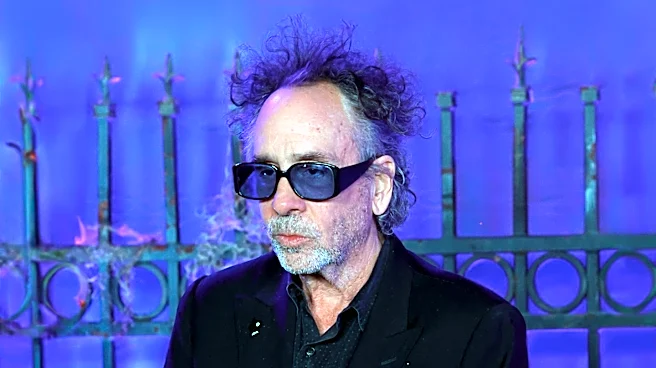
Tim Burton was dismissed from Disney in 1984 after completing his live-action short film, 'Frankenweenie.' The studio considered the film, which depicted a boy bringing his dead dog back to life through science, to be too dark for children. Despite Burton having
worked as an animator and concept artist at Disney since 1981, contributing to projects like 'The Fox and the Hound' and 'Tron,' the studio deemed 'Frankenweenie' unsuitable for its target audience and gave it an unacceptable PG rating. Disney producer Don Hahn later commented that the studio struggled to accommodate Burton's unique and quirky style within its established image at the time. The short was initially shelved and only shown in one theater before being stored away. This decision marked a significant turning point in Burton's early career, leading to his departure from the company.
Why It's Important?
This event is significant as it highlights the early challenges faced by a visionary filmmaker whose distinctive artistic style clashed with established corporate norms. Disney's decision to fire Tim Burton over 'Frankenweenie' underscores the tension that can arise between creative expression and commercial viability within large studios. While Disney viewed the film as a misallocation of resources due to its perceived darkness, the very short that led to his dismissal ultimately became a catalyst for his independent career. The incident demonstrates how a perceived failure or rejection can, in fact, pave the way for greater artistic freedom and success outside conventional structures. It also illustrates the evolving nature of audience reception and what is considered 'acceptable' content, as 'Frankenweenie' was later re-evaluated and even remade as a feature film, suggesting a shift in cultural acceptance of darker themes in animation.
What's Next?
Following his dismissal from Disney, the short film 'Frankenweenie' was seen by producer Paul Reubens and his team. This viewing led to Burton being hired to direct 'Pee-Wee's Big Adventure,' which was released in August 1985. This opportunity effectively launched Burton's career as a feature film director, allowing him to develop his unique cinematic vision further. The success of 'Pee-Wee's Big Adventure' demonstrated that there was an audience for his distinctive style, proving Disney's initial assessment of his work as 'unsuitable' to be shortsighted in the long run. This trajectory suggests that future projects from Burton would continue to explore themes and aesthetics that might be considered unconventional by mainstream studios, solidifying his reputation as a director with a singular artistic voice.
Beyond the Headlines
The firing of Tim Burton by Disney over 'Frankenweenie' delves into deeper implications regarding artistic freedom versus corporate control in the entertainment industry. It exemplifies how a major studio's brand identity and perceived target audience can restrict creative talent, potentially stifling innovative storytelling. Burton's subsequent success, particularly with films like 'Beetlejuice,' 'Edward Scissorhands,' and 'The Nightmare Before Christmas,' which are characterized by their dark, gothic, and often quirky aesthetics, demonstrates that there is a significant market for narratives that deviate from traditional family-friendly fare. This event underscores the value of independent production and the willingness of some producers to take risks on unique artistic visions, ultimately enriching the cinematic landscape with diverse storytelling. It also highlights the long-term impact of early career setbacks, which can often serve as pivotal moments for artists to define and refine their unique voice outside of restrictive environments.