






What's Happening?
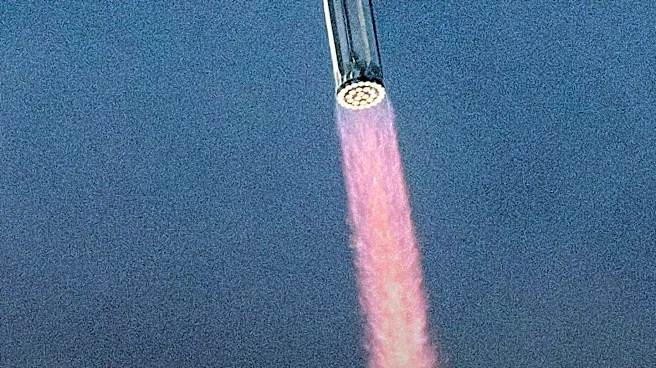
SpaceX's thirteenth Starship test flight was aborted at the last second on July 16, 2026, when four Raptor engines failed to ignite at the critical T-0 moment. This failure triggered an automatic abort sequence, preventing the launch and necessitating
the offloading of cryogenic propellant from the vehicle. The incident marks a significant anomaly in the Starship test campaign, raising concerns about the reliability of the engines. SpaceX has not yet provided a detailed technical breakdown of the failure but has announced a new target launch date for July 20, 2026. Engineers are expected to replace two of the booster's Raptor engines to ensure a successful flight.
Why It's Important?
The aborted launch highlights the challenges SpaceX faces in coordinating the complex systems of the Starship, particularly the reliability of its Raptor engines. This incident could impact SpaceX's ambitious plans for rapid development and deployment of its Starship program, which is crucial for future missions, including potential Mars colonization. The reliability of the Raptor engines is vital for the success of these missions, and any delays could affect SpaceX's timeline and financial projections. Additionally, the incident underscores the importance of rigorous testing and quality assurance in aerospace engineering.
What's Next?
SpaceX plans to attempt the next launch on July 20, 2026, after replacing the affected Raptor engines. The company will likely conduct thorough inspections and tests to prevent similar issues in future launches. Stakeholders, including investors and partners, will be closely monitoring the situation, as the success of the Starship program is critical to SpaceX's long-term goals. The outcome of the next launch attempt could influence public and investor confidence in SpaceX's capabilities and its future projects.