






What's Happening?
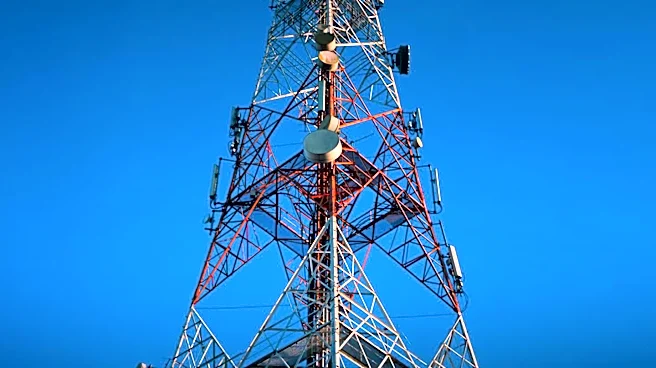
Virgin Media O2 (VMO2) is employing a wind tunnel at the University of Manchester to test and optimize the design of its 5G basestations, aiming to cut costs and improve efficiency. The project focuses on Vecta's ExoFlex, a steel frame that allows basestation components
like radios and antennas to be pre-assembled and cabled in a controlled factory environment before being shipped to a mast. This method significantly reduces installation time from four to seven days down to just one day, according to Rob Joyce, VMO2's director of mobile access engineering. The wind tunnel tests are designed to measure the 'sail area' or wind load of the ExoFlex assembly, providing data to demonstrate that the new design reduces pressure on supporting towers. This could potentially lead to lower payments to mast providers, as towers may not require costly reinforcement.
Why It's Important?
This initiative is important for the U.S. telecommunications industry as it demonstrates an innovative approach to reducing the significant capital and operational expenditures associated with 5G network deployment. By optimizing basestation design and installation processes, VMO2 aims to achieve substantial cost savings, which could influence similar strategies among U.S. carriers. The ability to reduce installation time and potentially lower fees for mast usage directly impacts the profitability and scalability of 5G infrastructure. This approach could accelerate the rollout of 5G networks, improving connectivity and supporting economic growth. For U.S. businesses and consumers, faster and more cost-effective 5G deployment means enhanced services, new technological opportunities, and potentially more competitive pricing for mobile services.
What's Next?
VMO2 plans to use the data from the wind tunnel tests to convince mast providers, such as Cornerstone, that the ExoFlex design reduces wind load, thereby justifying lower charges for tower usage. If successful, this could set a precedent for how telecommunications companies negotiate with infrastructure providers. The results from Manchester might also influence the future design of the ExoFlex and could open opportunities for Vecta with other telcos in Europe and potentially beyond. The success of this innovation could lead to wider adoption of pre-assembled basestation units and advanced aerodynamic testing in the telecommunications sector, driving further efficiencies and cost reductions across the industry.
Beyond the Headlines
Beyond the immediate cost savings and efficiency gains, this project highlights the growing trend of interdisciplinary collaboration between academic institutions and industry to solve complex engineering challenges. The use of a university wind tunnel, traditionally used for sports or aerospace, for telecommunications infrastructure underscores the versatility of scientific research facilities. Ethically, the drive for cost reduction in infrastructure development must be balanced with ensuring network reliability and safety. Culturally, this innovation reflects a broader shift towards modular design and prefabrication in various industries, aiming for greater control, quality, and speed in deployment. Long-term, such advancements could contribute to more resilient and sustainable telecommunications networks, capable of withstanding environmental challenges while delivering high-performance connectivity.