


What's Happening?
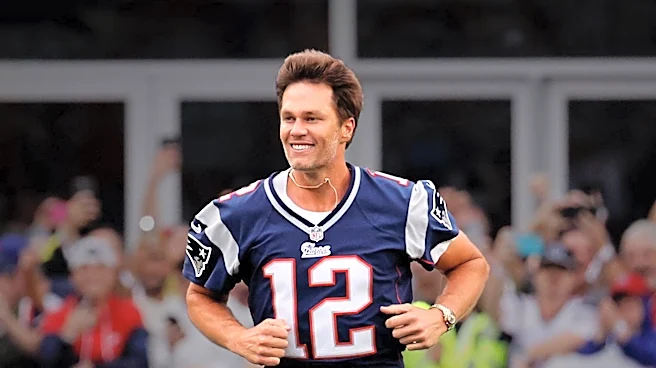
Lars Anderson, biographer of NFL legend Tom Brady, has speculated about a potential return to the NFL for Brady in 2027. Anderson, author of “Brady: An American Story and the Price of Greatness,” shared his thoughts during an appearance on “Front Office
Sports Tonight.” He stated that he would not be surprised if Brady attempted to play again, suggesting that Brady might still harbor a desire to achieve an eighth Super Bowl title. Anderson clarified that this speculation is not based on any direct conversations with Brady or inside information, but rather his interpretation of Brady's past sentiments and competitive drive. Brady officially retired in February 2023 after 23 NFL seasons, holding numerous all-time records including passing yards, touchdowns, and completions, and winning seven Super Bowls. His final season with the Tampa Bay Buccaneers in 2022 coincided with his divorce from Gisele Bündchen, a period Anderson described as Brady being an “empty shell.”
Why It's Important?
A potential return by Tom Brady to the NFL, even as speculation, carries significant implications for the sports industry and the league. Brady's unparalleled career and status as one of the greatest athletes of all time mean any comeback would generate immense media attention, boosting viewership and revenue for the NFL. For teams, the prospect of acquiring a player of Brady's caliber, even at an advanced age, could dramatically alter competitive landscapes and team valuations. However, there are substantial hurdles. Brady currently holds a minority ownership stake in the Las Vegas Raiders, a position that would require divestment before he could play again, as NFL rules prohibit active players from owning stakes in franchises. His age, turning 49 next August, also presents an unprecedented challenge for a quarterback in modern NFL history, raising questions about physical capability and performance at such an advanced stage of a career. The financial and logistical complexities of such a move would be immense, impacting not only Brady's personal wealth but also the Raiders' ownership structure and the league's operational policies.
What's Next?
While Anderson's comments are purely speculative, any future consideration of an NFL return by Tom Brady would necessitate several critical steps and decisions. First, Brady would need to address his minority ownership stake in the Las Vegas Raiders. NFL rules would require him to divest from this position, a process that could be complex given the reported value of his stake. Second, Brady would face intense scrutiny regarding his physical condition and ability to perform at an elite level at nearly 50 years old. This would likely involve rigorous training and medical evaluations. Third, a team would need to be willing to sign him, weighing the potential benefits of his star power and experience against the risks associated with his age and time away from the game. The NFL itself would also need to navigate the unprecedented nature of such a comeback, potentially setting new precedents for player-owner relationships and age limits. Brady has previously acknowledged inquiring about a return, stating that the league "don't like that idea very much" due to his ownership, and has publicly stated he is "very happily retired."
Beyond the Headlines
The ongoing speculation about Tom Brady's potential return to the NFL touches upon deeper themes beyond mere sports statistics. It highlights the enduring human fascination with defying age and pushing the boundaries of athletic longevity, challenging conventional notions of retirement in professional sports. Brady's career has already redefined what is possible for a quarterback, and a comeback at nearly 50 would further cement his legacy as an outlier. This narrative also underscores the psychological pull of competition and the difficulty for elite athletes to fully step away from the game they have dominated. Furthermore, the conflict between his ownership stake and playing eligibility raises ethical and regulatory questions within the NFL regarding conflicts of interest and the integrity of the game. It forces a re-evaluation of how the league manages its most iconic figures post-retirement, especially when their business ventures intersect with their playing aspirations. The public's continued engagement with these rumors reflects a collective desire to witness extraordinary feats and the emotional connection fans have with their heroes.