


What's Happening?
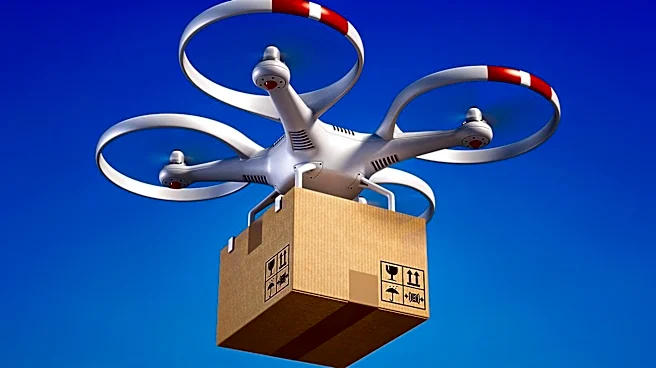
DoorDash CEO Tony Xu announced that the company's 'Dots' robots are now completing nearly 10% of delivery volume in the Phoenix market. This development comes shortly after Uber Technologies began delivering Uber Eats orders via Zipline drones in Spring,
Texas. Xu's statement, made at the TomorrowX Summit, indicates that these robot deliveries are for real customers placing real orders, not merely demonstrations. This achievement means DoorDash reached its year-end target for robot delivery in its largest test market ahead of schedule. While DoorDash is developing its own robots and drones, Uber is relying on partnerships for autonomous delivery, including an investment in Zipline and a deal with Amazon for free Uber Eats delivery for Prime members. DoorDash is also awaiting regulatory and stockholder approval for its approximately $17 billion acquisition of Instacart.
Why It's Important?
The increasing adoption of autonomous delivery by DoorDash and Uber signifies a critical shift in the logistics and food delivery industries, with significant implications for operational efficiency and cost structures. DoorDash's strategy of building its own 'Dots' robots and 'DoorDash Air' drones could offer a long-term advantage in terms of cost per delivery, as any savings would directly benefit the company. This is particularly important for DoorDash, which operates with thinner profit margins compared to Uber. A lower cost per delivery is a key milestone for DoorDash before a wider rollout of its robot program. The rivalry between these companies in autonomous delivery, alongside other strategic moves like DoorDash's potential acquisition of Instacart and Uber's partnership with Amazon, highlights a competitive landscape focused on technological innovation and market share expansion. The success of these autonomous delivery methods could redefine customer expectations and operational models across the U.S. delivery sector.
What's Next?
DoorDash's next financial report, expected in February, will be a crucial opportunity for the company to provide more details on the unit economics of its 'Dots' robot deliveries and whether a wider rollout beyond Phoenix is planned. CEO Tony Xu has indicated that a broader expansion would depend on demonstrating clear customer benefits and favorable unit economics. The outcome of DoorDash's proposed acquisition of Instacart also remains a significant factor, as regulatory and stockholder approvals are still pending. If approved, the integration of Instacart's substantial order volume could provide a natural expansion opportunity for DoorDash's autonomous delivery fleet. Meanwhile, Uber's continued efforts with drone delivery through Zipline will further intensify the competition in the autonomous delivery space, pushing both companies to innovate and optimize their respective strategies for efficiency and market penetration.
Beyond the Headlines
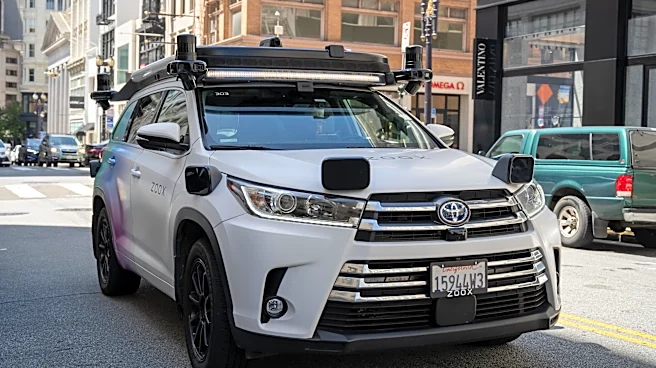
The push towards autonomous delivery by companies like DoorDash and Uber extends beyond mere operational efficiency, touching upon broader societal and economic implications. The development and deployment of delivery robots and drones could lead to significant changes in the labor market, potentially reducing the demand for human delivery drivers in the long term. This raises questions about job displacement and the need for workforce retraining. Furthermore, the increased automation of delivery services could alter urban logistics, potentially reducing traffic congestion and carbon emissions if electric autonomous vehicles are widely adopted. However, it also introduces new challenges related to infrastructure, regulatory frameworks for autonomous operations, and public acceptance of robots and drones in daily life. The ethical considerations of autonomous systems, including data privacy and accountability in case of incidents, will also become increasingly prominent as these technologies become more integrated into the fabric of U.S. cities.