
What's Happening?
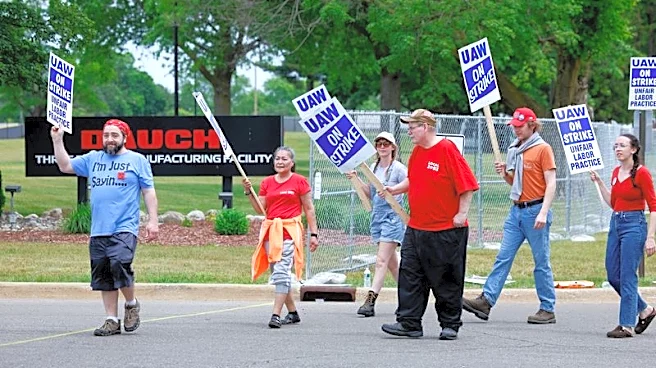
Members of the United Auto Workers (UAW) Local 2093 at Dauch Corp., formerly known as American Axle, have voted to ratify a new four-year contract after a 10-day strike involving nearly 1,000 workers at the company's
plant in Three Rivers, Michigan. The agreement, which was approved by 80% of the union members, includes a provision for top wages to reach $30 per hour by 2030 and additional paid days off. The strike was initiated after wages, which had been reduced during the Great Recession from $29 to $14.50 per hour to keep the plant operational, had not returned to pre-recession levels even 18 years later. The strike raised concerns about potential disruptions in production at General Motors, as Dauch supplies components for several of the automaker's pickup trucks.
Why It's Important?
The ratification of the new contract at Dauch Corp. is significant as it addresses long-standing wage issues that have persisted since the Great Recession. The agreement marks a victory for the UAW members who sought to restore their earnings to pre-recession levels, highlighting the ongoing struggle for fair wages in the manufacturing sector. This development is crucial for the automotive industry, particularly for General Motors, which relies on Dauch for parts used in its pickup trucks. The resolution of the strike helps avert potential supply chain disruptions that could have impacted production and sales. Additionally, the successful negotiation may set a precedent for other labor negotiations in the industry, emphasizing the importance of addressing wage disparities and improving working conditions.
What's Next?
With the new contract in place, Dauch Corp. and its workers can focus on stabilizing operations and meeting production demands, particularly for General Motors. The agreement may encourage other unions and companies to re-evaluate their wage structures and labor agreements, potentially leading to more negotiations across the industry. Stakeholders will likely monitor the implementation of the contract terms, including the gradual wage increases and additional benefits, to ensure compliance and satisfaction among the workforce. The outcome of this negotiation could influence future labor relations and contract negotiations within the manufacturing sector.