




What's Happening?
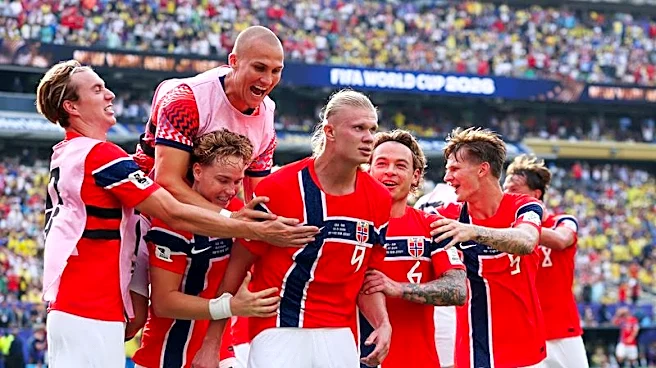
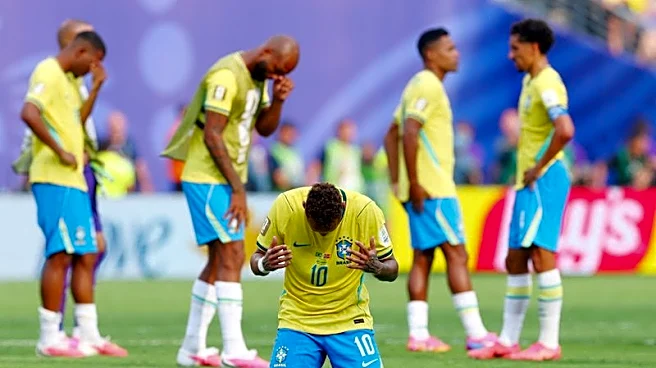
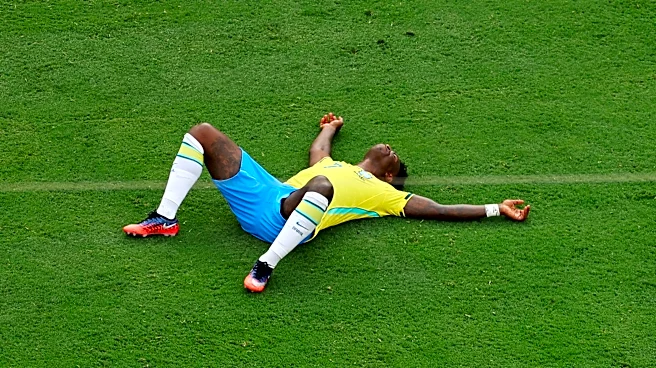
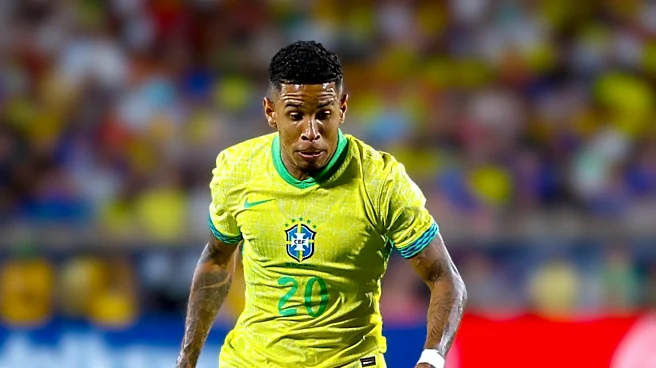
Brazil faced an unexpected defeat in the round of 16 at the World Cup, marking their earliest exit since 1990. The match against Norway ended in a 2-1 loss, with Brazil's decision-making during a crucial penalty kick being a focal point. Vinícius Júnior,
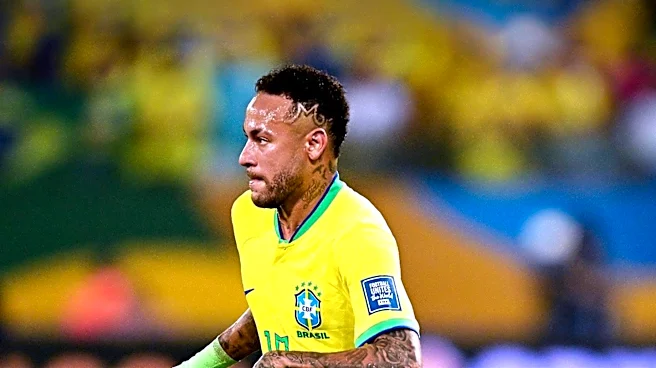
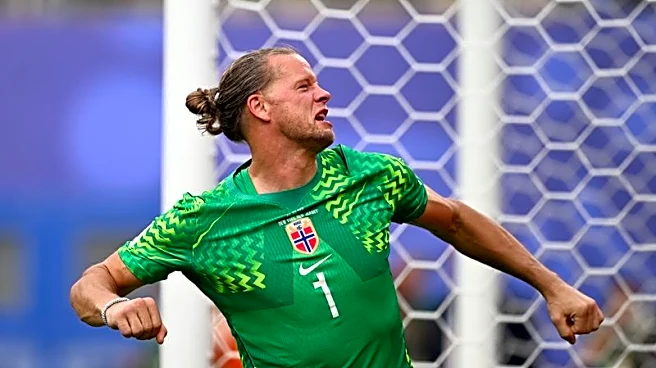
initially poised to take the penalty, handed the ball to Bruno Guimarães, whose shot was saved by Norway's goalkeeper Ørjan Nyland. This decision has led to widespread second-guessing, especially since Neymar, who later scored, was not on the field at the time due to injuries. Coach Carlo Ancelotti explained that the choice was based on analytics and the availability of players, with Guimarães being the next best option after Neymar and Raphinha, who was injured.
Why It's Important?
The defeat has significant implications for Brazil, a nation with a storied history in World Cup soccer. The decision to let Guimarães take the penalty instead of Vinícius or Neymar has sparked debate over strategy and leadership within the team. This loss could lead to introspection and changes in how Brazil approaches future tournaments, especially in terms of player selection and tactical decisions. The early exit also impacts Brazil's standing in international soccer, potentially affecting sponsorships, fan support, and the morale of the team and its supporters.
What's Next?
Brazil will need to regroup and reassess their strategies as they prepare for future competitions. The team's leadership, including Captain Marquinhos, has acknowledged the need for improvement and support for the next generation of players. This cycle of reflection and rebuilding is crucial for Brazil to reclaim their status as a dominant force in soccer. The upcoming years will be pivotal in shaping the team's approach and performance in international tournaments.
Beyond the Headlines
The decision-making process during the penalty kick highlights the complexities of sports analytics and its role in real-time decisions. It raises questions about the balance between data-driven strategies and instinctual choices in high-pressure situations. Additionally, the cultural and emotional impact of such a loss on Brazilian society, where soccer is deeply ingrained, could influence public sentiment and national pride.