






What's Happening?
Effective office furniture layouts are essential for boosting productivity and employee satisfaction, according to Office Stock. The right layout balances employee needs with organizational goals, considering factors like collaboration, privacy, and focus.
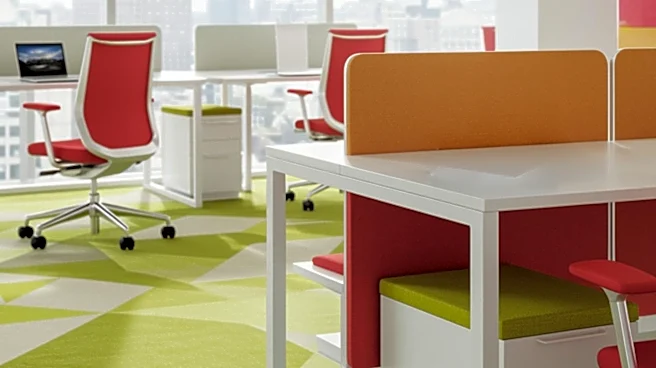
Different layouts, such as open-plan, cubicle, and hybrid models, offer varied advantages. Open-plan designs encourage collaboration but may lack privacy, while cubicle layouts provide focus but can lead to isolation. Hybrid layouts offer a versatile solution, combining collaborative spaces with areas for focused work. The rise of remote and hybrid work models necessitates flexible office layouts, including modular furniture that can be reconfigured and meeting rooms equipped with video conferencing tools. Additionally, creating spaces for informal interactions, such as breakout areas and café-style seating, can foster creativity and innovation.
Why It's Important?
The design of an office space directly impacts employee productivity, well-being, and a company's overall success. A poorly designed layout can lead to increased stress, decreased focus, and reduced collaboration, ultimately affecting business outcomes. Conversely, a thoughtfully planned office environment can enhance communication, support diverse work styles, and promote a positive company culture. In an era where attracting and retaining talent is critical, providing an optimal workspace is a significant competitive advantage. Investing in ergonomic furniture, natural light, and technology integration not only improves individual performance but also contributes to a healthier and more engaged workforce, leading to higher output and innovation. The flexibility to adapt layouts for hybrid teams is particularly vital for businesses navigating evolving work models.
What's Next?
Businesses are increasingly focusing on optimizing their office spaces to meet the demands of modern work. This involves a continuous assessment of current layouts and gathering employee feedback to identify areas for improvement. The trend towards modular and adaptable furniture solutions is expected to continue, allowing companies to reconfigure spaces easily as team sizes and needs change. Technology integration will remain a priority, with ongoing investments in tools that facilitate seamless communication and collaboration between in-office and remote employees. Furthermore, there will be a greater emphasis on design elements that promote well-being, such as natural light, ergonomic setups, and color psychology. Companies that proactively address these aspects of office design will be better positioned to foster productive and satisfied workforces.
Beyond the Headlines
The discussion around office layouts extends beyond mere aesthetics or efficiency; it touches upon the psychological and social dynamics of the workplace. The balance between individual focus and collective collaboration is a constant challenge, and the physical environment plays a significant role in shaping these interactions. The shift towards hybrid work models has further complicated this, requiring offices to become more dynamic and responsive to varying needs. This evolution highlights a deeper understanding of human behavior in professional settings, recognizing that a sense of control, comfort, and connection are crucial for optimal performance. The ethical implication lies in creating inclusive spaces that cater to different working styles and preferences, ensuring that no employee feels marginalized or hindered by the physical environment. Ultimately, office design is becoming a strategic tool for fostering a thriving organizational culture.