






What's Happening?
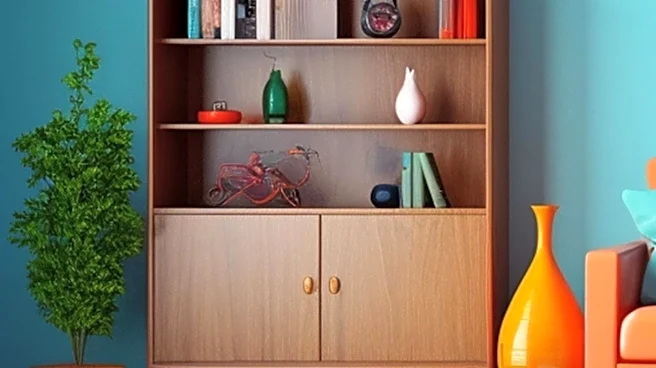
Pinterest has announced the beta launch of a new consumer-facing feature called 'Restyle' in the U.S. and Canada. This AI-powered tool allows users to redesign their rooms by taking a photo of their space and then prompting the AI to add or modify elements
such as wall art, furniture, accessories, and lighting. Users can also incorporate items found on Pinterest or visualize their room in different styles like 'bohemian' or 'industrial.' The 'Restyle' feature is built on Pinterest Intelligence, which combines Nvidia Blackwell GPUs and Nvidia Dynamo with open-source models and Pinterest's proprietary technology. This initiative aims to bridge the gap between inspiration and purchase by enabling users to visualize products in their own homes, potentially increasing conversion rates from saved pins to actual sales. The feature was teased at Pinterest's annual Pinterest Presents event, where other advertising tools were also introduced.
Why It's Important?
The introduction of 'Restyle' by Pinterest marks a significant advancement in how consumers interact with home decor and e-commerce. By leveraging AI to allow users to visualize products in their personal spaces, Pinterest is directly addressing a key challenge in online shopping: the inability to physically try out items. This feature could substantially enhance the user experience, making the platform more engaging and practical for home design enthusiasts. For businesses, 'Restyle' offers a powerful new avenue for product showcasing and direct sales, potentially increasing conversion rates and reducing returns by providing a more accurate preview of how items will look. This move positions Pinterest as a more direct competitor in the home furnishing and interior design market, potentially impacting traditional retail models and other online decor platforms.
What's Next?
The 'Restyle' feature is currently in early preview and is slated for a broader rollout next month. Pinterest will likely monitor user feedback and engagement during this initial phase to refine the AI's capabilities and user interface. Future developments could include expanding the feature to more regions, integrating with additional e-commerce partners, and enhancing the AI's ability to understand complex design prompts. The success of 'Restyle' could also influence Pinterest's broader strategy, potentially leading to more AI-driven tools that facilitate direct purchasing and personalized content delivery. Advertisers on the platform may also see new opportunities to integrate their products more seamlessly into the 'Restyle' experience, further blurring the lines between content, inspiration, and commerce.
Beyond the Headlines
The 'Restyle' feature represents a deeper shift in the intersection of artificial intelligence, visual search, and consumer behavior. It moves beyond simple product recommendations to offer an immersive, personalized design experience that could fundamentally change how people approach home decoration. This technology raises interesting questions about the future of interior design services, potentially democratizing access to design tools that were once exclusive to professionals. Furthermore, it highlights the growing power of AI in transforming digital platforms into interactive marketplaces, where users can not only discover but also virtually experience products before committing to a purchase. The ethical implications of AI-driven personalization and data usage will also be a continuous consideration as such features become more prevalent.