





What's Happening?
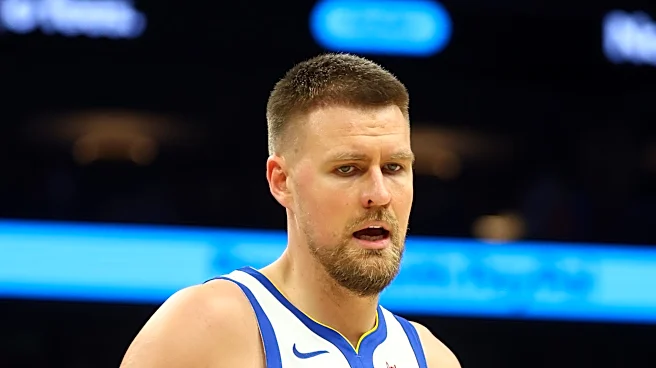
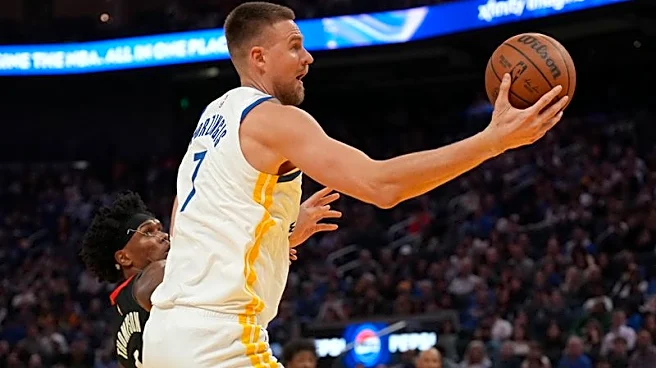
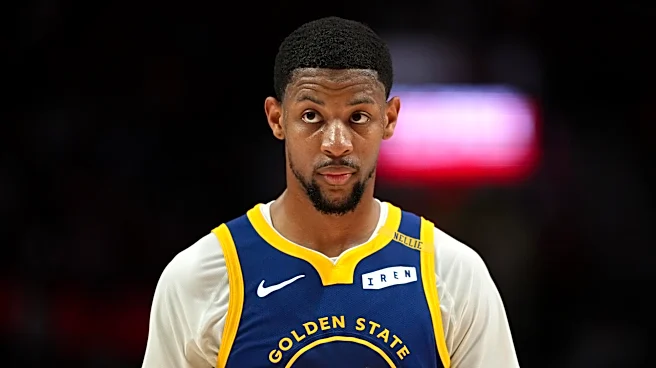
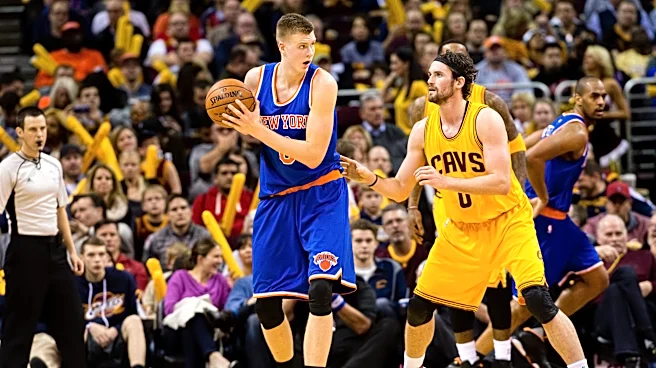
The Golden State Warriors have ceased paying veteran center Kristaps Porziņģis his $20 million salary, citing his failure to render services. According to ESPN's Shams Charania and Anthony Slater, Porziņģis has been away from the team since late September
due to recurring symptoms of Postural Orthostatic Tachycardia Syndrome (POTS) and has reportedly been contemplating retirement. He signed a two-year, $40 million contract last summer, with only $3 million guaranteed for the second season. The Warriors' decision to withhold payments is costing Porziņģis approximately $218,341 per game, as reported by Bobby Marks. Despite the non-payment, the team is not planning to void his contract, aiming to use his $20 million salary as a trade asset before the February 11 NBA trade deadline. Porziņģis and the National Basketball Players Association currently have no plans to challenge the Warriors' decision.
Why It's Important?
This situation highlights a significant contractual dispute in professional sports, particularly concerning player health and team obligations. For the Golden State Warriors, withholding Porziņģis' salary allows them to manage their financial commitments while exploring trade options for his contract. His 'expiring contract' status, with only a small portion guaranteed for the next season, could be attractive to teams looking to clear cap space, even if the Warriors need to attach draft picks or a young player to facilitate a trade. For Porziņģis, the decision to withhold pay, coupled with his health issues and contemplation of retirement, casts uncertainty over his NBA career and financial future. The case also sets a precedent for how teams might handle players with long-term, non-injury-related absences, potentially influencing future contract negotiations and player-team relations across the league.
What's Next?
The Golden State Warriors are expected to continue exploring trade avenues for Kristaps Porziņģis before the February 11 NBA trade deadline. His contract, despite the current non-payment, remains a valuable asset for trade purposes, particularly for teams seeking to shed longer-term salaries or clear cap space. While Porziņģis and the Players Association are not currently challenging the Warriors' decision, this stance could change if the situation evolves. The ongoing health issues and his reported contemplation of retirement suggest that his return to playing in the NBA is uncertain. The Warriors' ability to successfully trade his contract will significantly impact their roster flexibility and financial strategy for the current and upcoming seasons.
Beyond the Headlines
The dispute between the Golden State Warriors and Kristaps Porziņģis delves into the complex intersection of player health, contractual obligations, and team financial strategy in professional sports. While NBA contracts are typically guaranteed, the Warriors' decision to withhold salary based on 'not rendering services' raises questions about the interpretation of such clauses, especially when a player is dealing with a chronic health condition like POTS. This situation could prompt further discussions within the NBA Players Association regarding protections for players facing long-term health challenges that impact their ability to perform. The case also underscores the financial pressures on NBA teams, particularly those operating under salary cap restrictions, and their efforts to maximize asset value even in challenging circumstances.