



What's Happening?
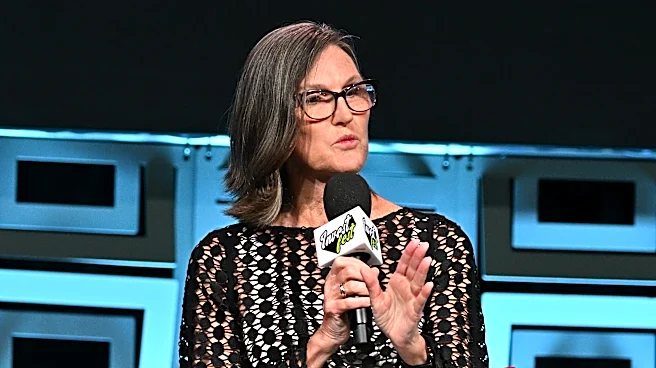
Major investment funds, including Cathie Wood's ARK Invest and Dan Loeb's Third Point, significantly increased their holdings in Block (formerly Square) during the third quarter, despite a split among big money investors. ARK Invest raised its Block stake
by 49%, acquiring an additional 1.52 million shares to reach a total of 4.62 million shares, valued at approximately $340 million. This made Block ARK's 18th-largest holding. Similarly, Dan Loeb's Third Point increased its Block shares by 24%, holding 3.18 million shares worth $234 million, making it the fund's fifth-largest position. Overall, nine large funds bought Block shares, while seven sold off their holdings, indicating a divided view on the company's future prospects. The largest single move was a sale by PointState Capital, which divested all 3.09 million of its Block shares, valued at about $235 million.
Why It's Important?
The divergent investment strategies among prominent funds highlight the ongoing debate about Block's valuation and growth potential. While Cathie Wood and Dan Loeb are betting on the company's future, other significant players are exiting their positions. This split sentiment can create volatility in Block's stock price and signals uncertainty among institutional investors. Analysts project Block's normalized EPS to reach $6.70 in 2028, and the stock currently trades at 14 times forward earnings, significantly lower than its five-year average of 35 times. This valuation discrepancy suggests that some investors see an undervaluation and growth opportunity, particularly with the performance of its Cash App. The decisions of these influential investors can sway market perception and influence retail investor behavior, making Block a closely watched stock in the fintech sector.
What's Next?
The mixed signals from institutional investors suggest that Block's stock performance will likely remain subject to ongoing scrutiny and debate. Future earnings reports and strategic announcements from Block, particularly concerning the growth and profitability of its Cash App and other services, will be critical in swaying investor sentiment. The company's ability to demonstrate sustained growth and improved profitability could attract more buyers and potentially lead to a re-rating of its stock. Conversely, any signs of slowing growth or increased regulatory pressure on its lending practices could reinforce the bearish view. Investors will also be watching for further disclosures from major funds in subsequent quarters to see if the trend of buying or selling Block shares continues, which could provide clearer direction on the market's long-term outlook for the company.
Beyond the Headlines
The differing views on Block reflect broader themes in the fintech industry, particularly the balance between innovation, growth, and profitability. Companies like Block, which have rapidly expanded their user base through innovative payment solutions and financial services, often face questions about the sustainability of their growth and their path to consistent profitability. The debate also touches upon the risk appetite of different investment philosophies; while some funds prioritize high-growth potential despite current valuations, others may be more cautious, focusing on established profitability and lower risk. The performance of Block in the coming quarters could serve as a bellwether for how the market values disruptive fintech companies, especially those with significant exposure to consumer lending through platforms like Cash App. This dynamic interplay between growth potential and financial prudence will continue to shape investment decisions in the evolving digital finance landscape.