






What's Happening?
Warehousing services have significantly evolved from their traditional role of static storage units to becoming dynamic logistical service providers. Initially, warehouses were primarily seen as facilities for systematically keeping goods to maintain
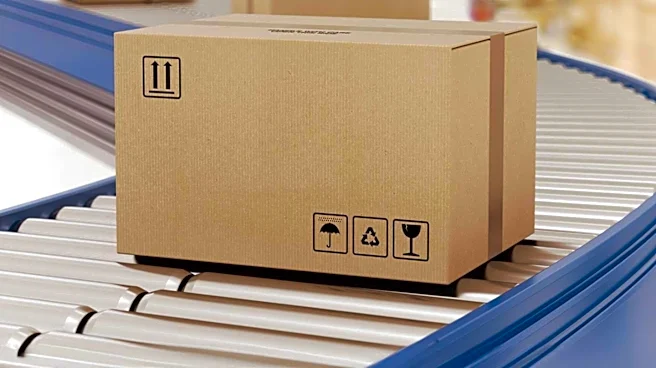
their quality and value. However, they now offer a broader range of functions aimed at cost-efficient supply chain management, ensuring the right quantity of goods is available at the right place and time. Key services include 'breaking bulk,' where large quantities from production plants are divided into smaller, client-specific shipments. 'Stock piling' involves seasonal storage of goods or raw materials not immediately needed, such as agricultural products, to meet demand throughout the year. Additionally, warehouses provide 'value-added services' like in-transit mixing, packaging, labeling, and grading, often involving repackaging or relabeling for inspection or distribution. These expanded services highlight a shift towards more integrated and responsive supply chain solutions.
Why It's Important?
The transformation of warehousing services holds significant importance for U.S. industries by enhancing supply chain efficiency and market stability. By offering 'breaking bulk' and 'stock piling,' warehouses enable businesses to manage inventory more effectively, reducing waste and ensuring product availability. This is particularly crucial for industries with seasonal production or demand, allowing for smoother operations and consistent market supply. The provision of 'value-added services' such as packaging and labeling streamlines the distribution process, potentially reducing costs and time for businesses by consolidating multiple steps within the warehouse. This evolution supports various sectors, including e-commerce, manufacturing, and retail, by providing flexible and responsive logistical solutions. Ultimately, these advanced warehousing capabilities contribute to price stabilization by adjusting supply to demand, benefiting both producers and consumers by mitigating price volatility and ensuring a steady flow of goods.
What's Next?
The ongoing evolution of warehousing is expected to continue integrating advanced technologies and services to further optimize supply chains. Future developments may include increased automation, data analytics for demand forecasting, and more sophisticated inventory management systems. Businesses will likely seek warehouses that offer highly customized and flexible solutions to meet specific industry needs, such as specialized storage for solar panels, EVs, or healthcare products. The emphasis will remain on cost-efficiency and speed, pushing warehouses to adopt innovative practices to reduce lead times and improve delivery accuracy. This trend suggests a future where warehouses are not just storage facilities but critical hubs for complex logistical operations, playing an even more central role in the global and domestic movement of goods.
Beyond the Headlines
The shift in warehousing from mere storage to comprehensive logistical support reflects broader economic and technological trends. This evolution underscores the increasing complexity of global supply chains and the demand for greater efficiency and resilience. The ability of warehouses to offer 'value-added services' and contribute to 'price stabilization' highlights their critical role in market dynamics, extending beyond simple logistics to influence economic stability. This development also raises questions about the future of labor in the warehousing sector, with automation potentially changing job roles and skill requirements. Furthermore, the strategic location and operational sophistication of warehouses are becoming key competitive advantages for businesses, influencing market access and consumer satisfaction. The ethical implications of efficient supply chains, such as reducing waste and ensuring fair pricing, also come into focus as warehouses become more integral to the economic fabric.