










What's Happening?
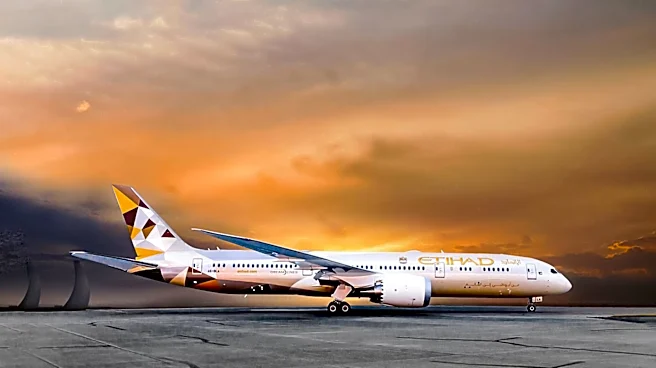
Etihad Airways has launched the first nonstop air service connecting Abu Dhabi and Luxembourg, making it the inaugural Middle Eastern carrier to serve the European country. The new route commenced on October 21, operating four times a week using an Airbus
A321LR aircraft. This aircraft configuration includes two first suites, 14 business-class seats, and 144 economy seats. According to Etihad CEO Antonoaldo Neves, demand for the route has been strong since bookings opened in January. The service aims to provide direct access for travelers from Luxembourg and its neighboring regions, including Belgium, France, and Germany, to Abu Dhabi, with onward connections to Asia and other destinations. Luxembourg Airport CEO Alexander Flassak noted the significance of this direct link for passengers in the greater region. This expansion is part of Etihad's broader strategy of network growth in 2026, utilizing the A321LR to make thinner routes economically viable.
Why It's Important?
This new direct air service is important for several reasons. For Luxembourg, it enhances global connectivity, offering its residents and those in surrounding countries a direct gateway to the Middle East and beyond, which can stimulate tourism and business travel. For Etihad Airways, it signifies strategic market expansion into a previously unserved European market, reinforcing its position as a global carrier. The use of the Airbus A321LR highlights a trend in the aviation industry towards utilizing more fuel-efficient and versatile aircraft to open up new, potentially less dense routes, thereby optimizing operational costs and expanding network reach. This move also positions Abu Dhabi as a more accessible hub for European travelers, potentially increasing transit passenger numbers and boosting the local economy through tourism and related services. The service could also foster stronger economic and cultural ties between the UAE and the Benelux region.
What's Next?
Etihad Airways is expected to continue monitoring the performance of the new Luxembourg route, potentially adjusting frequencies or aircraft types based on demand. The airline has indicated a broader strategy of opening new routes across various regions, suggesting further network expansion in the near future. Meanwhile, Luxair, Luxembourg’s flag carrier, had previously announced plans to launch services to Abu Dhabi but postponed them due to geopolitical tensions. It remains to be seen when Luxair will resume its plans, and how its eventual entry into the Abu Dhabi market might affect competition and pricing on the route. The success of Etihad's new service could also encourage other Middle Eastern carriers to explore direct routes to smaller European markets, further diversifying air travel options for consumers.
Beyond the Headlines
The introduction of direct flights to smaller nations like Luxembourg by major international carriers like Etihad reflects a broader shift in global aviation strategy. Airlines are increasingly looking beyond traditional hub-to-hub routes to tap into underserved markets, leveraging modern aircraft technology that makes such routes economically feasible. This trend can democratize air travel, offering more direct options to travelers who previously faced multiple layovers. It also underscores the growing economic importance of smaller nations as destinations and origins for international travel and commerce. Furthermore, the geopolitical considerations cited by Luxair for postponing its Abu Dhabi service highlight the ongoing sensitivity of airline operations to regional stability, demonstrating how external factors can influence route development and market competition in the aviation sector.