



What's Happening?
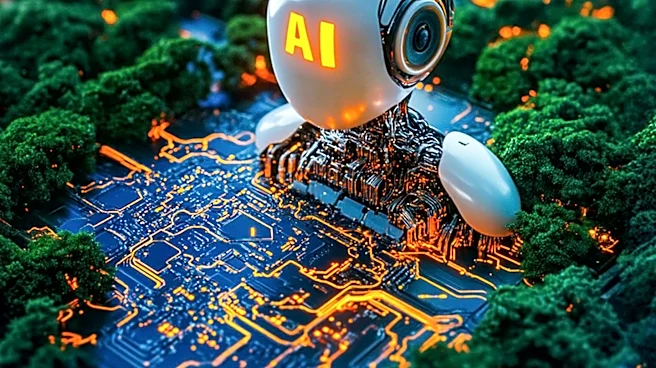
Hollywood studios are significantly increasing their investments in artificial intelligence (AI) for filmmaking, a move that is encountering considerable resistance from Generation Z. Recent research conducted by NRG indicates that two-thirds of Gen Z respondents
are against the use of AI to replace actors. This opposition highlights a growing concern among younger audiences regarding the implications of AI in the entertainment industry. The skepticism stems from fears of job displacement for human creatives, a potential decline in the quality of visual content produced by AI, and a strong belief in the intrinsic value of human creativity in artistic endeavors. This presents a challenge for studios aiming to adopt AI technologies while simultaneously trying to maintain the support and engagement of a crucial demographic.
Why It's Important?
The pushback from Gen Z against AI in filmmaking is significant because this demographic represents a substantial portion of current and future audiences and consumers of entertainment content. Their skepticism could influence box office performance, streaming viewership, and overall public perception of AI-generated content. If studios fail to address these concerns, they risk alienating a key demographic, potentially leading to reduced engagement and revenue. The debate also underscores broader societal anxieties about automation and its impact on creative industries, raising questions about the future of human employment in fields traditionally reliant on artistic talent. The industry's approach to integrating AI will likely set precedents for other creative sectors grappling with similar technological advancements.
What's Next?
Hollywood studios will likely need to re-evaluate their strategies for AI integration to address the concerns raised by Gen Z. This could involve more transparent communication about the role of AI, focusing on its use as a tool to enhance human creativity rather than replace it. There may be a push for ethical guidelines and industry standards regarding AI use in production to safeguard human jobs and creative integrity. Additionally, studios might explore collaborative models where AI assists human artists, rather than fully automating roles. The ongoing dialogue between industry leaders and younger audiences will be crucial in shaping the future adoption and acceptance of AI in filmmaking, potentially leading to new approaches that balance technological advancement with artistic and social responsibility.
Beyond the Headlines
The resistance from Gen Z to AI in Hollywood extends beyond immediate job concerns, touching upon fundamental questions about the nature of art, authenticity, and human expression. The debate highlights a generational divide in how technology is perceived within creative fields; while some view AI as an inevitable progression, others see it as a threat to the unique value of human artistry. This cultural tension could lead to a redefinition of what constitutes 'authentic' entertainment and influence audience preferences for content created by humans versus machines. It also raises ethical considerations about intellectual property, the potential for AI to perpetuate biases, and the long-term impact on the creative workforce's skill sets and economic stability. The outcome of this struggle could shape the cultural landscape for decades, influencing how future generations interact with and value artistic creations.