


What's Happening?
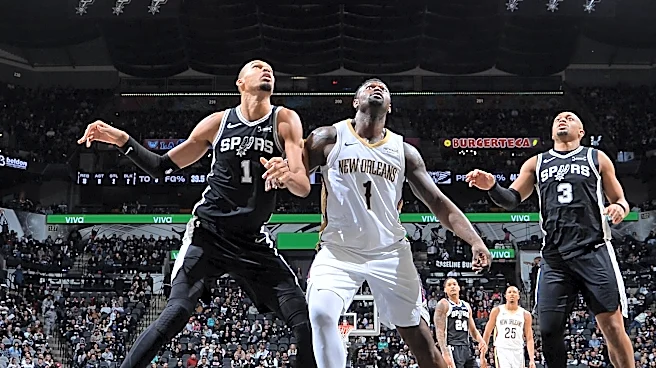
The New Orleans Pelicans experienced a notable improvement in their performance following DeMarcus Cousins' Achilles injury during the 2017-18 NBA season. Despite Cousins' assertion that the team did not get better without him, statistical analysis indicates
otherwise. Before his injury, the Pelicans held a 27-21 record, ranking 14th in net rating and 22nd defensively. After Cousins' departure, the team finished the regular season with a 21-13 record, increasing their winning percentage from .563 to .618. Over the final 34 games of the season, New Orleans climbed to 10th in net rating and sixth defensively. Their offensive efficiency saw only a slight dip, while their scoring actually increased due to a faster pace of play, moving from 100.48 possessions per 48 minutes to 102.89. This shift in playstyle, with Anthony Davis moving to center, Nikola Mirotic joining the team, and Jrue Holiday taking on a larger offensive role, made the Pelicans faster, more versatile, and significantly better defensively.
Why It's Important?
This analysis is important for understanding team dynamics and the impact of player injuries on NBA franchises. It highlights how a significant injury to a star player, while seemingly detrimental, can sometimes lead to strategic adjustments that improve overall team performance. The Pelicans' case demonstrates that individual dominance, while valuable, does not always equate to optimal team success. The shift in roles and playstyle allowed the team to become more balanced and efficient, particularly on defense. This scenario offers a valuable lesson for other sports organizations in adapting to unforeseen circumstances and leveraging existing talent in new ways. It also underscores the evolving nature of basketball, where versatility and defensive prowess can sometimes outweigh the individual scoring power of a single player, especially in the context of a deep roster.
What's Next?
The Pelicans' experience post-Cousins' injury provides a historical case study for future roster construction and strategic planning. While the team's regular-season performance improved, the article notes that their postseason ceiling did not significantly change, as they were still unable to overcome the Golden State Warriors. This suggests that while tactical adjustments can enhance regular-season success, sustained playoff contention often requires a combination of individual talent and cohesive team play. For current and future NBA teams, this situation emphasizes the need for adaptability and a well-rounded roster that can perform under various conditions, including the absence of key players. The long-term impact of Cousins' injury on his career and Anthony Davis's eventual departure further illustrates how such events can alter a franchise's trajectory and lead to new eras of team building.
Beyond the Headlines
The narrative surrounding the Pelicans' performance after Cousins' injury delves into the deeper implications of team chemistry versus individual star power. It challenges the conventional wisdom that losing a dominant player automatically weakens a team. Instead, it suggests that such events can force a re-evaluation of strategies, leading to a more collaborative and defensively oriented approach. This situation also touches upon the psychological aspect of sports, where a team's resilience and ability to adapt can be tested and ultimately strengthened. The 'what-if' scenario of a healthy Cousins alongside Davis remains a point of speculation, highlighting the unpredictable nature of sports and the fine line between potential and actualized success. It underscores the idea that sometimes, a team's identity and success are forged not just by who is on the court, but by how they play together and adapt to adversity.