







What's Happening?
Estes Forwarding Worldwide (EFW), a subsidiary of Estes Express Lines, is actively recruiting Dockworkers for its warehousing operations. EFW, a prominent domestic and international freight forwarder based in Richmond, Virginia, specializes in customized
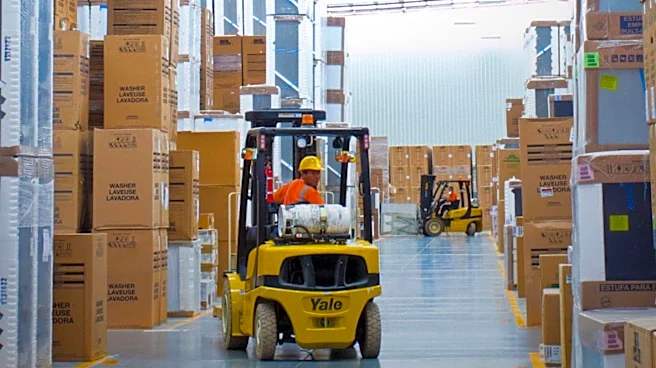
logistics and warehousing solutions globally. The company leverages Estes Express Lines' extensive line haul network to provide a hybrid transportation network for its clients. The Dockworker role involves safely and efficiently handling freight, including unloading, sorting, and loading, in compliance with federal, state, and customer regulations. Responsibilities also include operating hand and power tools for outbound blocking and bracing, maintaining accurate shipment records, and utilizing warehouse management systems. EFW emphasizes a team-oriented environment and offers a comprehensive benefits package, including paid vacation, sick time, holidays, a 401(k) plan with company match, and various insurance options. The company has received industry accolades, such as Specialty Carrier of the Year and E-Commerce Delivery Carrier of the Year, and has been recognized as a leading 3PL.
Why It's Important?
The recruitment drive by Estes Forwarding Worldwide highlights the ongoing demand for skilled labor within the U.S. logistics and freight forwarding sector. As a subsidiary of Estes Express Lines, EFW's expansion and need for dockworkers reflect broader trends in supply chain management and e-commerce growth, which continue to drive the need for efficient freight handling and warehousing. The company's focus on providing customized logistics solutions underscores the increasing complexity and specialization within the industry, where businesses require tailored services to manage their global supply chains effectively. The availability of competitive benefits and opportunities for career development could attract talent to a sector that is crucial for the national economy, ensuring the smooth flow of goods and supporting various industries. This expansion also signifies the continued investment in infrastructure and human capital necessary to maintain and enhance the U.S.'s position in global trade and logistics.
What's Next?
Estes Forwarding Worldwide will likely continue its recruitment efforts to fill these essential dockworker positions, aiming to strengthen its operational capacity and meet the growing demands of its client base. Successful candidates will undergo training to operate forklifts and pallet jacks, and will be expected to adhere to company security procedures, including C-TPAT and TSA guidelines. The company's emphasis on continuous learning and a fulfilling workplace suggests ongoing investment in employee development and retention. As EFW expands its workforce, it will be better positioned to enhance its service offerings and potentially explore new markets or logistics solutions. The continued growth of EFW, backed by Estes Express Lines' network, could lead to further job creation and economic activity in the regions where it operates, particularly in its Richmond, Virginia headquarters and other key logistical hubs.
Beyond the Headlines
The demand for dockworkers at Estes Forwarding Worldwide points to the critical, yet often overlooked, role of manual labor in the sophisticated world of global logistics. While technology and automation are increasingly prevalent, the physical handling and precise management of freight remain indispensable. This highlights a broader societal challenge: ensuring that the workforce is adequately trained and compensated for these foundational roles, which are vital for the functioning of the economy. The comprehensive benefits package offered by EFW could set a standard for other companies in the logistics sector, potentially influencing labor practices and worker retention strategies across the industry. Furthermore, the company's recognition as a leading 3PL and its focus on customized solutions reflect a shift towards more agile and responsive supply chains, driven by evolving consumer expectations and geopolitical dynamics. The ethical implications of ensuring safe working conditions and fair compensation for these essential workers are paramount as the logistics sector continues its rapid evolution.