






What's Happening?
New York City is featured as a central romantic setting in three new young adult (YA) novels: Lynn Painter’s 'Trust Fall,' Lygia Day Penaflor’s 'Beautiful to See You (Again),' and Mariko Turk’s 'The Museum of Modern Love.' These books, all set in the
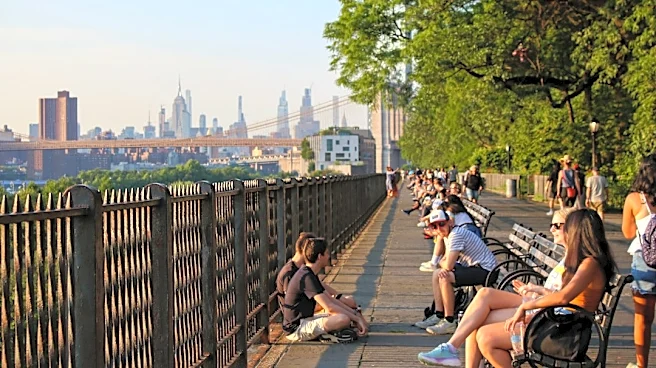
bustling metropolis, explore themes of young love, unlikely friendships, and grief. The authors reflect on how New York City's unpredictable nature and vibrant atmosphere contribute to their stories. Lynn Painter describes the city as 'buzzing with the possibility of everything,' where 'anything and everything can happen.' Her character, Julia, a small-town Midwestern girl, experiences New York with wide-eyed optimism, contrasting with the native New Yorker Damion's more realist perspective. Lygia Day Penaflor emphasizes the city's potential for unexpected encounters and its ability to be both incredibly lonely and full of opportunities. Mariko Turk's novel uses the Metropolitan Museum of Art as a key setting, highlighting how art encourages characters to slow down and truly see each other, much like they would a piece of art.
Why It's Important?
The consistent portrayal of New York City as a romantic and transformative setting in young adult literature reflects and reinforces its cultural significance as a place of dreams and possibilities for a younger demographic. This trend can influence how young readers perceive urban environments, potentially inspiring them to explore or move to such cities. For the publishing industry, the popularity of New York-centric narratives indicates a strong market for stories that blend personal growth with iconic urban backdrops, suggesting a continued demand for relatable yet aspirational settings. The authors' insights into how the city shapes their characters' perspectives—from wide-eyed optimism to a more jaded realism—offer nuanced views of urban life, which can resonate with diverse readers. Furthermore, the use of specific landmarks like Times Square and the Metropolitan Museum of Art not only grounds the stories in a recognizable reality but also highlights the cultural richness and diverse experiences available within the city, making it a character in itself.
What's Next?
The release of these three YA novels is likely to contribute to the ongoing literary trend of New York City as a prominent setting for romance and coming-of-age stories. Publishers may continue to seek out and promote narratives that leverage the city's iconic status and diverse environments to attract young readers. The success of these books could also inspire other authors to explore similar urban settings, or to delve into the unique cultural and social dynamics that cities like New York offer. For readers, these novels provide new perspectives on navigating relationships and personal challenges within a dynamic urban landscape. The discussions around these books may also encourage conversations about the role of setting in literature and how specific locations can profoundly impact character development and plot progression, particularly for a young adult audience seeking both escapism and relatable experiences.
Beyond the Headlines
Beyond their immediate appeal as romantic narratives, these novels subtly explore deeper themes relevant to young adults, such as identity formation, cultural assimilation, and the search for belonging in a vast, often overwhelming environment. The contrast between characters new to New York and those who are natives highlights the different ways individuals perceive and interact with their surroundings, offering insights into the immigrant or newcomer experience, even within a domestic context. The use of art and museums as a catalyst for connection, as seen in 'The Museum of Modern Love,' underscores the enduring power of cultural institutions to foster human connection and introspection in an increasingly fast-paced world. These stories, while romantic, also touch upon the loneliness and isolation that can exist within a densely populated city, providing a balanced view of urban life. Ultimately, they contribute to a broader cultural narrative that positions New York City not just as a backdrop, but as a dynamic force that shapes personal journeys and relationships.