


What's Happening?
The Cleveland Cavaliers have officially promoted Brandon Weems to General Manager, operating under President Koby Altman. This move was confirmed by the Cavaliers after initial reports from ESPN's Shams Charania. Weems has been with the Cavaliers organization
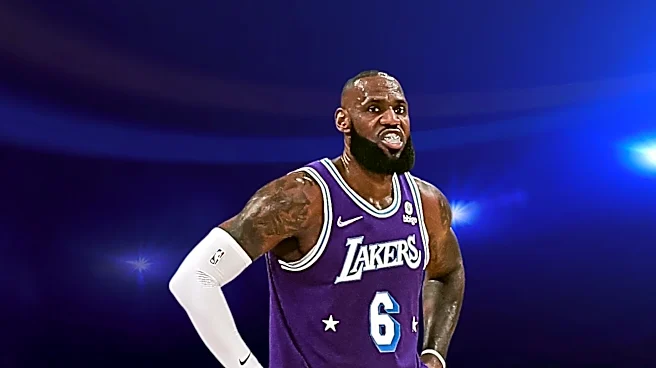
for a decade, progressing through scouting and personnel roles before becoming assistant general manager in 2022. The promotion signifies a continued internal development within the team's front office. Following the announcement, LeBron James publicly congratulated Weems on social media, expressing pride in his long-time associate's advancement. The Cavaliers also announced several other basketball operations appointments, including Jon Nichols to associate general manager, Jose Calderon and Brendon Yu as assistant general managers, and Dashiell Flynn as chief technology officer of basketball operations. These changes reflect a broader restructuring and strengthening of the team's management group as they prepare for the upcoming season.
Why It's Important?
This promotion is significant for the Cleveland Cavaliers as it places a seasoned internal executive, Brandon Weems, into a key leadership role. Weems' extensive background in scouting and personnel within the organization suggests a commitment to continuity and leveraging existing institutional knowledge. This approach can foster stability and a cohesive strategy in player evaluation and team building, which is crucial for a franchise aiming for sustained success. The public endorsement from LeBron James, a highly influential figure in the NBA, adds a layer of recognition and validation to Weems' promotion, potentially boosting morale and confidence within the organization. The broader restructuring of the basketball operations staff, including new assistant general managers and a chief technology officer, indicates a comprehensive effort to modernize and optimize the team's management structure, which could lead to more efficient decision-making and a competitive edge in player acquisition and development. This move also highlights the importance of internal talent development within professional sports organizations.
What's Next?
Following these front-office changes, the immediate focus for the Cleveland Cavaliers will be on how the newly structured management team, led by Koby Altman and Brandon Weems, will collaborate to address the team's needs and build a competitive roster. The effectiveness of this new leadership will be tested through upcoming player transactions, draft decisions, and overall team performance in the upcoming season. The integration of new assistant general managers and a chief technology officer suggests a potential shift towards more data-driven and technologically advanced approaches in basketball operations. Stakeholders, including fans and analysts, will closely monitor how these changes translate into on-court success and whether the team can capitalize on its existing talent while making strategic additions. The partnership between Weems and Altman will be crucial in navigating the complexities of roster management and ensuring the team remains a contender in the Eastern Conference.
Beyond the Headlines
The promotion of Brandon Weems and the broader restructuring of the Cavaliers' front office underscore a growing trend in professional sports towards valuing internal expertise and continuity. This move suggests that organizations are increasingly recognizing the benefits of promoting individuals who possess a deep understanding of the team's culture, existing personnel, and long-term vision, rather than constantly seeking external hires. The public celebration by LeBron James also highlights the intricate web of relationships and influence within the NBA, where player endorsements can carry significant weight and impact perceptions of leadership changes. Furthermore, the appointment of a chief technology officer for basketball operations signals a deeper integration of technology and analytics into strategic decision-making, reflecting a broader shift across the sports industry. This emphasis on data and specialized roles could lead to more sophisticated player development programs, advanced scouting techniques, and ultimately, a more scientifically informed approach to building a championship-caliber team.