
What's Happening?
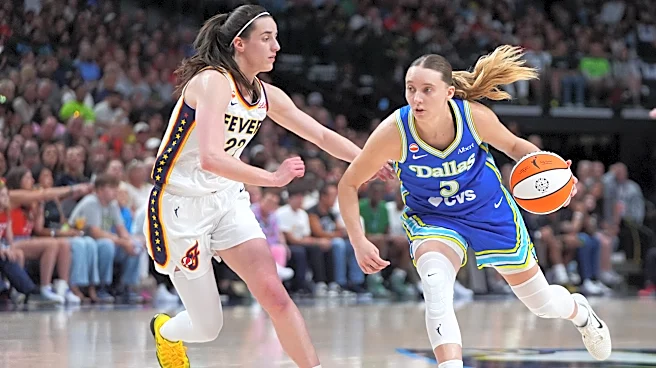
A rally was held outside the American Airlines Center in Dallas, Texas, in support of Indiana Fever player Sophie Cunningham's views on transgender women in sports. Cunningham has publicly stated her opposition
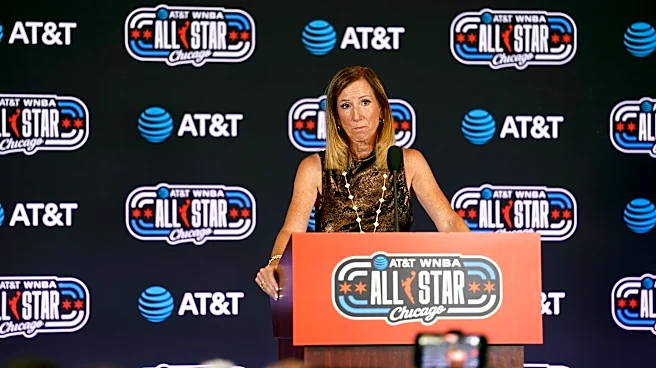
to transgender women and girls competing in women's and girls' sports, asserting a desire to protect young girls from competing against "biological men." Organizations like Texas Values and Texas Eagle Forum participated in the rally, echoing Cunningham's sentiment that women should have their own spaces specifically for sports. The WNBA's Collective Bargaining Agreement currently restricts the league to women but does not explicitly address gender identity or sex assigned at birth. There are currently no transgender women playing in the WNBA. The debate has prompted a response from a WNBA spokesperson, who stated there are no immediate eligibility matters affecting the league and denounced efforts to marginalize others.
Why It's Important?
This event highlights a growing national debate regarding the inclusion of transgender athletes in women's sports and its implications for fairness and equal opportunity. The support for Cunningham's stance from Texas-based groups underscores a significant segment of public opinion that believes biological sex should be the primary determinant in sports categories. This issue has broader societal implications, touching on LGBTQ+ rights, gender identity, and the future of competitive sports. The WNBA's cautious response reflects the complexity and sensitivity of the topic, as sports organizations navigate evolving social norms and legal frameworks. The controversy could influence policy discussions at state and national levels regarding sports regulations and protections for various athlete groups, potentially leading to legislative actions or changes in sports league policies across the U.S.
What's Next?
Sophie Cunningham has indicated no intention of retracting her statements, suggesting the debate will likely continue. The WNBA's current stance, which avoids immediate eligibility changes while denouncing marginalization, indicates a cautious approach. However, as public discourse intensifies, the league may face increasing pressure to clarify or update its policies regarding gender identity in sports. Activist groups on both sides of the issue are likely to continue advocating for their positions, potentially leading to further rallies, legislative efforts, or legal challenges. The ongoing discussion could also prompt other sports organizations to review their own rules and guidelines concerning transgender athlete participation, potentially setting precedents for how similar issues are addressed in other professional and amateur sports leagues in the U.S.
Beyond the Headlines
The controversy surrounding Sophie Cunningham's comments and the subsequent rally extends beyond the immediate sports context, touching upon fundamental questions of identity, fairness, and societal values. It highlights the tension between traditional understandings of sex and gender identity, particularly in competitive environments. The debate also brings to light the role of public figures and sports organizations in shaping social discourse and policy. Ethically, it raises questions about inclusivity versus competitive equity, and how to balance the rights and experiences of all athletes. Culturally, it reflects a broader societal struggle to adapt to evolving understandings of gender, with significant implications for how gender is defined and recognized in public life, education, and law across the United States.