






What's Happening?
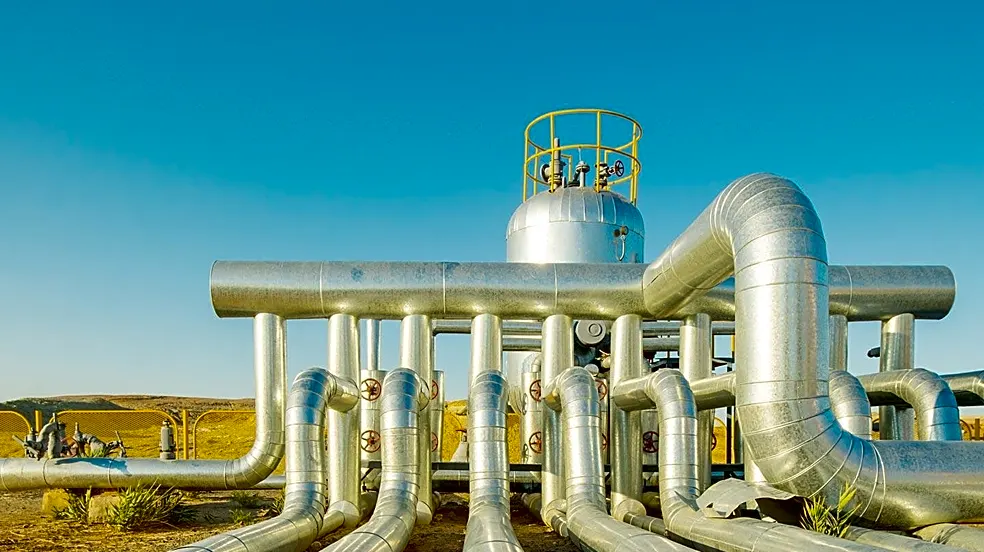
Kinder Morgan has approved a $1.6 billion investment in the Permian Link project, a natural gas pipeline designed to transport approximately 2.8 billion cubic feet of gas per day. This pipeline will span about 434 miles, connecting the Permian Basin near
Pecos County, Texas, to Natural Gas Pipeline Company of America's (NGPL) Midcontinent system. The primary purpose of this infrastructure is to supply natural gas to power providers serving a hyperscale data center customer in the Texas Panhandle. The project is part of a larger $4.7 billion investment by Kinder Morgan in two major natural gas pipeline joint ventures, driven by increasing demand from power generation, data centers, and liquefied natural gas (LNG) exporters. The Permian Link is expected to commence operations in the third quarter of 2030.
Why It's Important?
This investment is crucial for addressing the escalating energy demands of the technology sector, particularly hyperscale data centers, which require substantial and reliable power sources. The Permian Link project will enhance the natural gas transportation capacity from a major U.S. gas-producing region to consumption markets, thereby improving energy reliability in the Texas Panhandle. The project is backed by a 20-year contract with an investment-grade hyperscaler, ensuring stable cash flows for Kinder Morgan and signaling long-term commitment to meeting the energy needs of digital infrastructure. The expansion of pipeline infrastructure is vital for supporting economic growth and technological advancements that rely heavily on consistent power supply, while also potentially moderating regional natural gas costs over the long term.
What's Next?
The Permian Link project is slated to enter service in the third quarter of 2030. Kinder Morgan's executives have indicated that interest in the project extends beyond its initial large-scale data center customer, suggesting potential for additional demand as digital infrastructure continues to expand. The company's total project backlog has increased to $14.4 billion, with natural gas projects accounting for a significant portion, indicating a continued focus on expanding gas infrastructure. The successful implementation of this project could pave the way for further investments in similar energy infrastructure to support the growing power requirements of data centers and other energy-intensive industries across the U.S.
Beyond the Headlines
The development of the Permian Link pipeline highlights a broader trend of increasing energy consumption driven by the rapid expansion of digital infrastructure, particularly hyperscale data centers. This surge in demand for reliable power sources underscores the critical interdependence between the energy sector and the technology industry. The long-term contracts securing this project reflect a strategic move by energy providers to adapt to evolving market needs and secure future revenue streams. Furthermore, the project's focus on improving connectivity between gas-producing regions and consumption markets could have long-term implications for energy security and pricing stability in the U.S., influencing the economic viability of various industries dependent on natural gas.